
If your dentist or hygienist has recommended scaling and root planing, you might be wondering what makes it different from a regular cleaning. Often called a “deep cleaning,” this treatment targets buildup below the gumline that a standard cleaning can’t reach, and it’s a common recommendation once gum disease has progressed beyond the earliest stage. Understanding what the procedure involves can make the appointment feel far less intimidating.
This guide explains what scaling and root planing is, why it’s recommended, what happens during treatment, and how to care for your gums afterward. It is for general education only and is not a substitute for an in-person dental evaluation.
What Is Scaling and Root Planing?
Scaling and root planing is a two-part, non-surgical treatment used to manage gum disease that has progressed beyond gingivitis. It’s typically recommended when plaque and tartar have built up below the gumline, in the pockets that form between the tooth and the gum tissue as gum disease advances.
- Scaling removes plaque and tartar (hardened plaque) from the tooth surface and from below the gumline, down to the base of the periodontal pocket.
- Root planing smooths the root surfaces of the teeth. Rough root surfaces make it easier for bacteria to stick and harder for the gum tissue to reattach, so smoothing them supports healing and helps the gums fit more snugly against the tooth again.
Together, these two steps aim to remove the source of infection and give the gum tissue the best chance to heal and reattach to the tooth.
How Is It Different From a Regular Cleaning?
A routine dental cleaning (prophylaxis) focuses on the visible parts of the teeth and just below the gumline, and it’s typically recommended for patients with healthy gums or early-stage gum inflammation. Scaling and root planing goes further, addressing buildup deeper within periodontal pockets that have formed as a result of more advanced gum disease. Because it treats a larger area more thoroughly, it’s usually performed in one or more separate appointments, often with local anesthetic to keep you comfortable, rather than during a routine six-month cleaning visit.
Signs You Might Need Scaling and Root Planing
Your dentist or hygienist will measure the depth of the pockets around each tooth with a small probe during your exam. Along with pocket depth measurements, other signs that can point toward a recommendation for deep cleaning include:
- Gums that bleed easily when brushing or flossing.
- Gums that appear red, swollen, or tender.
- Persistent bad breath that doesn’t improve with regular brushing.
- Gums that have started to pull away from the teeth, making teeth look longer.
- Visible tartar buildup below the gumline on an X-ray or exam.
- Teeth that feel slightly loose or shifted.
The American Academy of Periodontology notes that early gum disease (gingivitis) can often be managed with improved home care and regular cleanings, but once it progresses to periodontitis, more targeted treatment such as scaling and root planing is generally needed to help control the infection and protect the supporting bone and tissue around the teeth.
What Happens During the Appointment
Every case is a little different, but a typical scaling and root planing appointment generally includes:
- A review of your gum measurements from your exam, so your hygienist knows which areas need attention.
- Local anesthetic, if needed, to keep the treatment area comfortable, since deep cleaning reaches below the gumline.
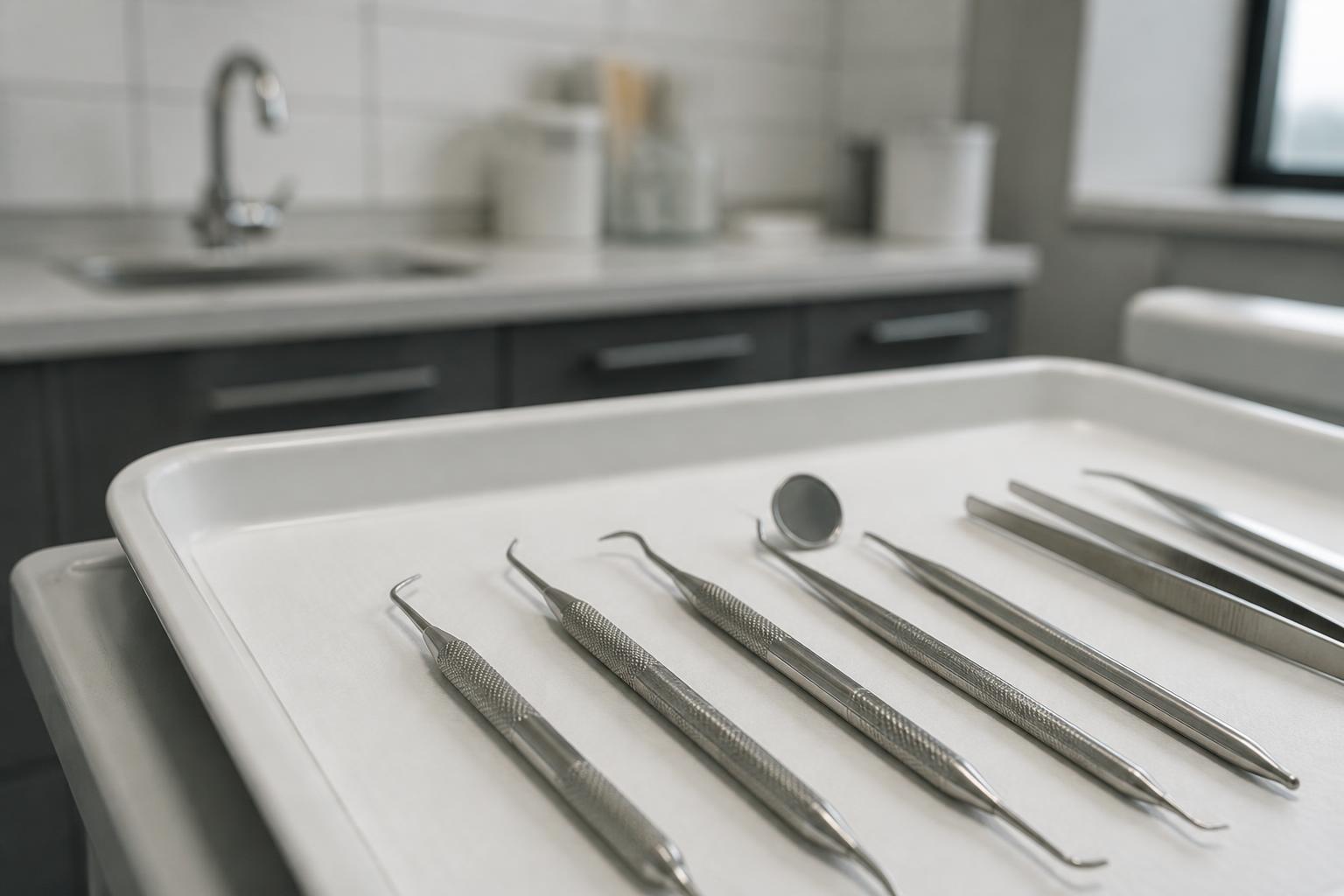
- Scaling using hand instruments, an ultrasonic device, or both, to remove plaque and tartar from the tooth surface and root.
- Root planing to smooth the root surface and remove any remaining bacterial residue.
- A discussion of home care and any follow-up visits needed to monitor healing.
Because deep cleaning covers a larger area than a routine cleaning, it’s often split into two visits, treating one side of the mouth at a time, though this varies by patient and by how much treatment is needed.

What to Expect Afterward
Some mild soreness, sensitivity to hot or cold, or minor gum tenderness in the days following treatment is common and generally temporary. Your hygienist or dentist may recommend:
- Rinsing gently with warm salt water or a recommended antimicrobial rinse.
- Sticking to softer foods for a day or two if the area feels tender.
- Continuing gentle brushing and flossing, even around treated areas, unless told otherwise.
- Attending a follow-up visit, often around four to six weeks later, so your dental team can re-measure pocket depths and see how the tissue has responded.
In many cases, gum tissue tightens back up around the teeth as inflammation decreases, which can reduce pocket depth over time. Ongoing maintenance cleanings, sometimes at a more frequent interval than the standard six months, are often recommended to help keep the condition stable going forward.
Why Treating Gum Disease Early Matters
Left untreated, gum disease can continue to affect the bone and connective tissue that support your teeth, which over time can contribute to tooth mobility and, in more advanced cases, tooth loss. Addressing the condition with a treatment like scaling and root planing, paired with good home care and regular maintenance visits, is aimed at stopping that progression and protecting your long-term oral health.
Supporting Your Gum Health Between Visits
Good daily habits play a significant role in how well your gums respond to treatment and how likely you are to need deep cleaning again in the future. Helpful habits generally include brushing twice a day with a soft-bristled brush, flossing or using an interdental cleaner daily to remove plaque from between teeth, and avoiding tobacco products, which can slow gum healing and increase the risk of gum disease. Staying consistent with your recommended maintenance cleaning schedule also gives your dental team the chance to catch any early changes before they progress into a bigger problem.
Questions to Ask at Your Next Visit
If scaling and root planing has been recommended for you, it can help to ask your dental team a few direct questions, such as how deep your current pockets are, which areas of your mouth are affected, whether the treatment will be done in one visit or split into two, and what kind of home care routine will best support healing afterward. Understanding your specific situation can make the treatment feel more manageable and help you stay engaged in your own care.
FAQs About Scaling and Root Planing
Does scaling and root planing hurt?
Most patients receive local anesthetic before treatment, so the procedure itself is generally not painful. Some soreness or sensitivity afterward, similar to what you might feel after a routine cleaning but slightly more pronounced, is common and usually improves within a few days.
Will I need scaling and root planing more than once?
It depends on how your gums respond and how well the condition is maintained afterward. Some patients need it only once, while others with more advanced or recurring gum disease may need periodic maintenance treatment. Your dental team will monitor your gum health at follow-up visits and let you know what’s recommended for your situation.
Can I just get a regular cleaning instead?
If pockets have already formed below the gumline, a standard cleaning generally can’t reach the buildup that’s contributing to the problem. Skipping recommended deep cleaning when it’s needed may allow the underlying gum disease to continue progressing.
Wondering If You Need a Deep Cleaning?
If your dentist has mentioned scaling and root planing, or if you’re noticing symptoms like bleeding, swollen, or receding gums, our team at Pickering Square Dental can evaluate your gum health and explain what treatment, if any, is recommended.
You can learn more about our periodontal and hygiene services on our services page. To schedule an evaluation or ask a question about your gum health, please contact us and our team will be glad to help.
This article is for educational purposes only and is not a substitute for personalized dental advice, diagnosis, or treatment. Always speak with a regulated dental professional about your specific concerns.

About Dr. Marvin Lean, DDS
Dr. Marvin Lean, DDS, is the owner and lead dentist at Pickering Square Dental. With decades of experience in family and laser dentistry, Dr. Lean provides care focused on clear communication and patient comfort. He is a member of the Ontario Dental Association (ODA) and the Canadian Dental Association (CDA). Dr. Lean and his team provide comprehensive dental care including sedation dentistry, dental implants, emergency dental care, and the Canadian Dental Care Plan (CDCP) to patients in Pickering, Ajax, Whitby, Scarborough, Oshawa, and Markham. Dr. Lean spent the last 20 years as the Dentist for the Toronto Maple Leafs.