Almost everyone wakes up with a dry mouth now and then. It becomes worth paying attention to when the dryness lingers through the day, keeps coming back, or starts to change how you eat, speak, or sleep. Saliva does far more than keep your mouth comfortable, so a lasting shortage of it can affect your teeth and gums as well as your comfort.
This guide explains the most common dry mouth causes, why saliva matters for your teeth, what you can try at home, and when it makes sense to schedule a dental visit. It is general education and cannot replace an exam.
What Dry Mouth Actually Is
Dry mouth, which dentists and physicians call xerostomia, is the feeling that there is not enough saliva in your mouth. Sometimes the salivary glands really are producing less saliva. Other times the amount is close to normal but the saliva is thicker, or the mouth dries out faster than usual, for example from breathing through the mouth at night.
People describe it in different ways: a sticky or cottony feeling, a dry or rough tongue, cracked lips, a sore throat in the morning, trouble swallowing dry foods, or needing water on the nightstand. Bad breath and a changed sense of taste are also common.
Why Saliva Matters for Your Teeth
Saliva is one of the mouth’s main natural defences. It rinses away food particles, helps neutralize the acids that bacteria produce after you eat, and carries minerals such as calcium and phosphate that help repair the earliest stages of enamel damage. It also keeps the soft tissues moist so they are less likely to become irritated, and it helps dentures stay comfortable.
When saliva is low for a long time, those protections weaken. The National Institute of Dental and Craniofacial Research notes that ongoing dry mouth raises the risk of tooth decay and of fungal infections in the mouth. Dentists often see this as new cavities near the gumline or around older fillings in patients who previously had very few problems.
Common Dry Mouth Causes
Dry mouth is a symptom rather than a disease, and it usually has an identifiable reason. These are the causes we hear about most often from patients.
Medications
Medications are the most frequent cause. Hundreds of commonly used prescription and over-the-counter products list dry mouth as a possible side effect, including many antihistamines, decongestants, antidepressants, anti-anxiety medications, blood pressure medications, muscle relaxants, and some pain medications. The effect is often stronger when several of these are taken together, which is one reason dry mouth becomes more common as people get older. Please do not stop or change a prescribed medication on your own. If you suspect a medication is involved, raise it with your physician or pharmacist.
Mouth Breathing and Sleep
Saliva flow naturally slows during sleep. If you also breathe through your mouth at night because of nasal congestion, allergies, or snoring, you may wake up very dry even though your mouth feels normal during the day. Dryness that appears mainly overnight points toward this cause.
Dehydration and Daily Habits
Not drinking enough water, long periods of exercise, fever, and hot weather can all reduce saliva for a while. Caffeine and alcohol can add to the dryness, as can alcohol-based mouthwashes. Smoking and vaping also dry and irritate the tissues of the mouth.
Health Conditions
Some medical conditions are linked to dry mouth, including diabetes and autoimmune conditions such as Sjogren’s syndrome, which affects the glands that make saliva and tears. If your dry mouth comes with dry eyes, unusual thirst, frequent urination, or fatigue, mention those symptoms to your physician. It is also helpful to keep your dental team informed, and our medical conditions page explains why your health history matters at dental visits.
Cancer Treatment
Radiation therapy to the head and neck can damage the salivary glands, and some chemotherapy medications thicken saliva or reduce its flow. Patients who are about to begin these treatments are often advised to see a dentist beforehand, since a mouth with low saliva needs extra cavity prevention.
What You Can Try at Home
Simple steps help many people feel more comfortable while the underlying cause is being sorted out:
- Sip water regularly through the day and keep water beside the bed.
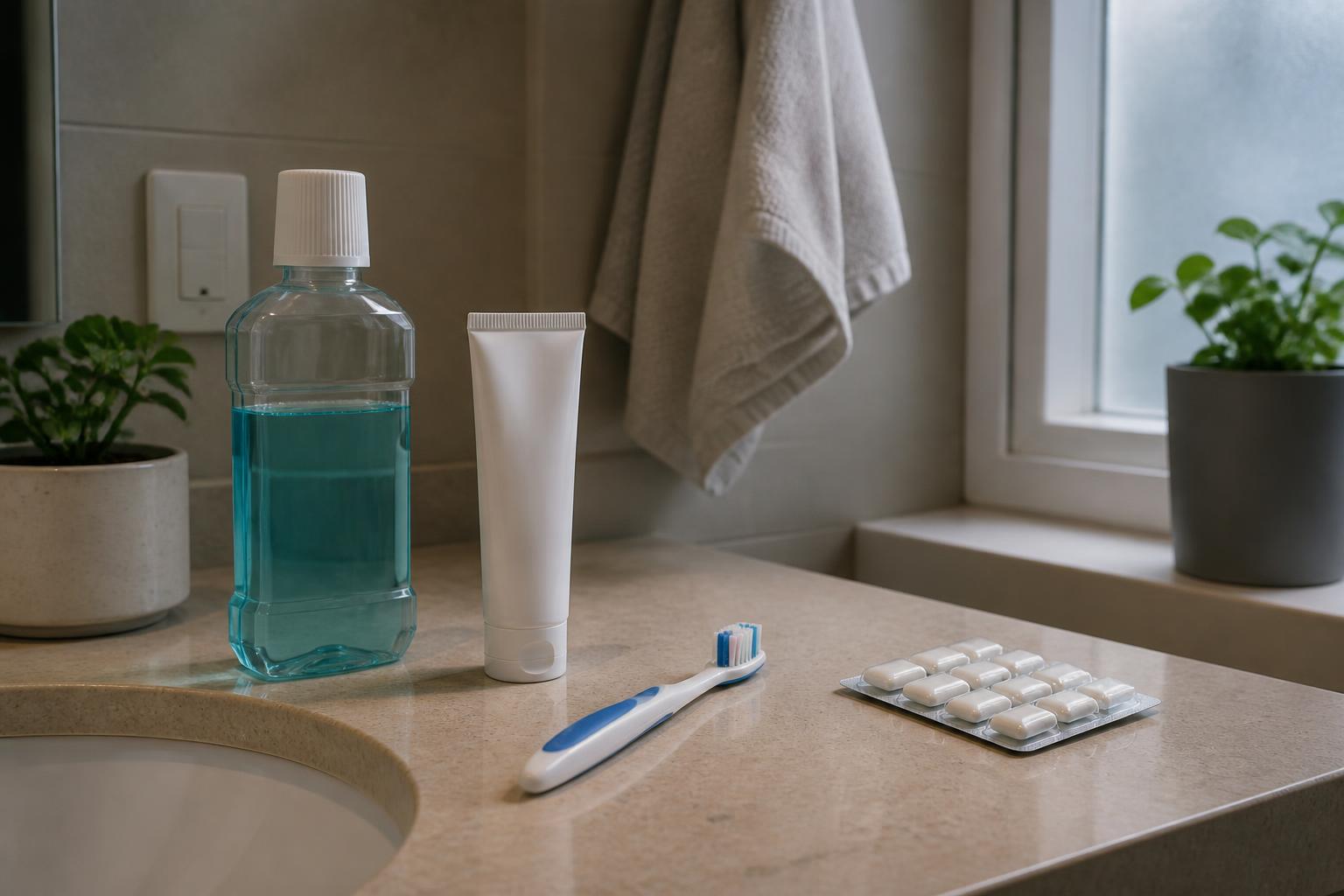
- Chew sugar-free gum or use sugar-free lozenges to stimulate saliva. Products sweetened with xylitol are a common choice.
- Limit caffeine and alcohol, and choose an alcohol-free mouthwash.
- Use a humidifier in the bedroom if the dryness is worse overnight.
- Avoid tobacco and vaping products.
- Go easy on sugary or acidic snacks and drinks, which are harder on teeth when saliva is low.
- Ask your pharmacist about over-the-counter saliva substitutes, which come as sprays, gels, and rinses.
Brushing twice a day with a fluoride toothpaste and cleaning between your teeth every day matters even more than usual, because your teeth have less natural protection.
When to See a Dentist About Dry Mouth

Consider scheduling a dental visit if your dry mouth has lasted more than a couple of weeks, if it keeps returning, or if you notice any of the following:
- New sensitivity, or cavities appearing more often than they used to
- Sore, red, or burning areas in the mouth, or white patches that do not wipe away
- Cracks at the corners of the lips that are slow to heal
- Difficulty chewing, swallowing, or speaking comfortably
- Dentures that have started to rub or feel loose
- Persistent bad breath despite good brushing habits
Difficulty swallowing that is getting worse, or swelling in the face or under the jaw, should be assessed promptly by a dentist or physician.
How a Dentist Can Help
A dental visit for dry mouth usually starts with a conversation about your symptoms, your medications, and your health history, followed by an exam of your teeth, gums, tongue, and the tissues that line your mouth. Your dentist is looking for early signs of decay, irritation, or infection, and for clues about why your mouth is dry.
From there, the plan depends on what is found. It may include more frequent cleanings and checkups for a period of time, professionally applied fluoride or a prescription-strength fluoride toothpaste to strengthen enamel, advice on saliva substitutes, and treatment of any cavities or sore areas. If a medication or a medical condition appears to be involved, your dentist may suggest that you speak with your physician, who can decide whether any change is appropriate.
Regular checkups are part of our family dentistry care, and they are the simplest way to catch the effects of dry mouth early, while they are still easy to manage.
Frequently Asked Questions
Is dry mouth a normal part of getting older?
Not by itself. Dry mouth is more common in older adults, but the usual reason is medication use or a health condition rather than age alone. That is good news, because it means there is often something that can be done about it.
Why is my mouth so dry at night?
Saliva flow drops naturally during sleep, and breathing through the mouth dries the tissues further. Nasal congestion, allergies, snoring, and some evening medications can all contribute. If it happens most nights, mention it at your next dental visit.
Can dry mouth cause cavities?
It can raise the risk. With less saliva to rinse away food and neutralize acids, teeth are more exposed to decay, particularly along the gumline and around existing fillings. Extra fluoride and regular checkups help offset that risk.
Does drinking more water cure dry mouth?
Staying hydrated helps if dehydration is part of the cause, and frequent sips make your mouth more comfortable. If a medication or a health condition is reducing saliva, water alone usually will not solve it, which is why a lasting dry mouth is worth having assessed.
Which mouthwash is best for dry mouth?
Choose an alcohol-free rinse, since alcohol can add to the dryness. Some rinses are made specifically for dry mouth. Your dentist or pharmacist can suggest an option that suits your situation.
Concerned About a Dry Mouth?
If your mouth has felt dry for a while, or you have noticed new sensitivity or cavities, our team at Pickering Square Dental would be glad to take a look and talk through your options. You can learn more about our care on the services page, or contact us to schedule an appointment.
This article is for educational purposes only and is not a substitute for personalized dental advice, diagnosis, or treatment. Always speak with a regulated dental professional about your specific concerns.

About Dr. Marvin Lean, DDS
Dr. Marvin Lean, DDS, is the owner and lead dentist at Pickering Square Dental. With decades of experience in family and laser dentistry, Dr. Lean provides care focused on clear communication and patient comfort. He is a member of the Ontario Dental Association (ODA) and the Canadian Dental Association (CDA). Dr. Lean and his team provide comprehensive dental care including sedation dentistry, dental implants, emergency dental care, and the Canadian Dental Care Plan (CDCP) to patients in Pickering, Ajax, Whitby, Scarborough, Oshawa, and Markham. Dr. Lean spent the last 20 years as the Dentist for the Toronto Maple Leafs.