Battling Aggressive Oral Cancer

oral cancer colorful word with stethoscope on wooden background

Diagnosis of cancer or even just a suspicion of cancer can be quite scary. Instantly, you think of people you know who lost their battles to cancer. You may even reflect on how most TV shows or movies that feature a character with cancer almost always has that person dying. You may be the one suffering or it could be someone dear to you – either way, cancer is something that can easily change the way you live your life.

Instead of living in fear, one of the things that you can do is to learn what you can about it. In this particular post, we aim to share with you some information on one of the most aggressive types of cancer which affects thousands of people every year – oral cancer.

Risk Factors

Knowing the causative factors of cancer can contribute to the prevention of the disease. For oral cancer, age is often named as a risk factor (it often occurs in those past the age of 40).  In the recent years, the anterior of the mouth, alcohol, and tobacco-associated cancers have declined in number along with a corresponding decline in smoking. Posterior of the oral cavity sites that are associated with the HPV16 viral cause, on the other hand, are increasing.

It is also likely that the accumulative damage caused by factors like excessive alcohol consumption, tobacco use, and viral infections like HPV are the real culprits. It should also be noted that those who drink and smoke are at 15 times higher risk of developing oral cancer.

There are also physical factors like ultraviolet radiation exposure. This is often the cause of cancers of the lip, whose numbers have declined in the last few decades most likely because of increased awareness. People now understand the damaging effects of prolonged exposure to the sun and the benefits of wearing sunscreen. Biological factors associated with oral cancers include viruses and fungi. HPV16 in particular has been implicated in oral cancers.

Treatment

Once a definitive diagnosis is made and the cancer is staged, treatment may start. Treatment of oral cancers is often a multidisciplinary approach that involves the collaborative effort of dental practitioners, surgeons, chemotherapy oncologists, radiation oncologists, nutritionists, and rehabilitation and restorative specialists.

The actual treatment modalities are often chemotherapy with concurrent radiation, and sometimes, surgery.

Chemotherapy is currently not used as a lone approach for oral cancers but instead added to decrease the possibility of metastasis, to reduce the size of malignancy before the surgery, and to sensitize the malignant cells to radiation. It is also a powerful component of treatment for patients with confirmed distant metastasis of the disease.


Before the curative treatment starts, other oral health needs have to be taken care of. It is necessary so the likelihood of getting post-therapeutic complications would be lessened. Teeth that have poor prognosis from caries or periodontal problems may be extracted. Avoiding post-radiotherapy surgery is important because it can sometimes induce osteonecrosis which happens when tissue damaged by radiation exposes the underlying bone and does not heal. A thorough prophylaxis or cleaning will probably be done before treatments start.

Every cancer phase potentially paves an avenue to discovering a new therapy for treatment. And with all the research being conducted, there is always a possibility that we will see cures for oral cancer in our lifetime.


Helpful Resources

dental treatment

For more information, visit the Canadian Dental Association Oral Health.

Schedule Your Appointment Today

Contact Pickering Square Dental to book your appointment with Dr. Marvin Lean. Call us at (905) 420-1777 or visit us at 1450 Kingston Rd, Unit #4, Pickering, ON.

Frequently Asked Questions

How often should I visit the dentist?

The Canadian Dental Association recommends visiting your dentist at least twice a year for regular check-ups and cleanings. Some patients may need more frequent visits depending on their oral health needs. Call Pickering Square Dental at (905) 420-1777 to schedule your next appointment.

Do you accept the Canadian Dental Care Plan (CDCP)?

Yes, Pickering Square Dental participates in the Canadian Dental Care Plan. Our team can help you understand your coverage and ensure you receive the dental care you need. Contact us for more details about CDCP eligibility and benefits.

What services does Pickering Square Dental offer?

We offer a full range of dental services including family dentistry, emergency dental care, sedation dentistry, dental implants, laser dentistry, teeth whitening, root canal therapy, dental extractions, periodontal care, and cosmetic dentistry. Dr. Lean and our team serve patients in Pickering, Ajax, Whitby, and Scarborough.

Implant Key Terms You Need to Understand

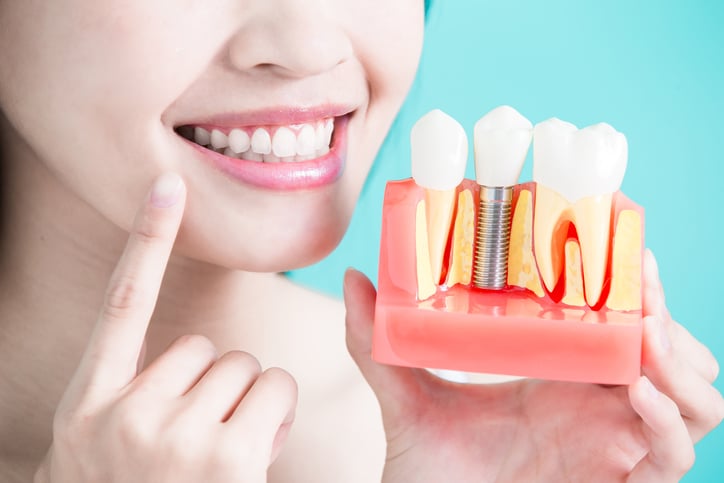
woman take tooth implant false tooth on green background

If you have been told that you should consider dental implants and you are not exactly sure what they are, the best thing for you to do is discuss it with your dentist. But like with other dental procedures, there might be some terms that could sound “alien” to you. That could get in the way of you fully understanding what you need to know about dental implants.

To help you decode dental lingo, here are some terms that you should know:

Abutment

It is a connector that the dentist will attach to the top of your dental implant. This will serve as the attachment for the replacement tooth, bridge, or crown, keeping it securely in place.

Abutment Teeth

This refers to the teeth that support the partial denture or bridge. The bridge is attached during a crown prep or inlay/onlay prep. If for a partial denture, clasps or rests are necessary to support the denture on the abutment tooth.

Crown

A crown or a cap, as it is also called, replaces the top portion and layer of a tooth. If you have broken or lost a tooth because of injury, infection, or decay, your dentist can fit you with a crown to replace the damaged or missing one. Crowns fit over the top of existing teeth but they must be ground down to fit or attached to the abutment of an implant.

Ceramic

This is a material used to make dental implants. It is made of clay that is hardened by heat. Some people like the aesthetic appeal of ceramic better than titanium because it gives a more natural look. It is available in ivory, which looks similar to existing roots and teeth. Ceramic implants are an option for patients with allergy to metal.

Endosteal Implant

This is the most commonly used implant type in modern dentistry. To fit this particular style of implant, small screws, plates, blades, or cylinders are placed directly into the jawbone surgically. Every implant can hold at least one prosthetic tooth.

Eposteal Implant

This type of implant receives support by directly resting on the jawbone. This is not used often today in dentistry as it is often seen as an outdated method.


Implant or Fixture

This is a medical device that interfaces with the jawbone to support a bridge, crown, or denture. Most dental implants last for patients’ entire lives so they are deemed better than bridges which would need replacement and dentures which can be uncomfortable for the wearer.

Titanium and Zirconia

Most dental implants these days are made of titanium. This is the preferred material of most patients because very few people are allergic to titanium. It is also very durable and lightweight. There is a small percentage of people who are allergic to titanium, and for them Zirconia is a good option. Zirconia implants have no prosthetic connections, lowering the risk of bacteria growth. Patients may also find that they have better gum health with this type of implant. Its white colour makes it look more like a natural tooth.

If you want to know more about dental implants or you’re wondering if it’s an option for you, do call Pickering Square Dental and we will set an appointment for you!


Looking for professional help? Learn more about our dental implant services at Pickering Square Dental or call (905) 420-1777 to book an appointment.

Helpful Resources

dental service

For more information, visit the Canadian Dental Association on Dental Implants.

Frequently Asked Questions

How long do dental implants last?

With proper care and regular dental check-ups, dental implants can last 25 years or more. Many patients enjoy their implants for a lifetime. At Pickering Square Dental, Dr. Lean uses high-quality titanium implants designed for long-term durability.

Are dental implants painful?

Most patients report less discomfort than expected. The procedure is performed under local anaesthesia, and sedation options are available. Post-procedure soreness typically resolves within a few days with over-the-counter pain relief.

Am I a candidate for dental implants?

Most adults with good general health are candidates for dental implants. You need adequate jawbone density to support the implant. Dr. Lean will assess your bone health and overall suitability during a consultation at our Pickering office.

Keep a Healthy Heart with Better Dental Care

Portrait of beautiful young woman with perfect smile. Isolated on white.

Heart disease is among the top causes of death for both men and women worldwide. Countless studies have been dedicated to finding out the causes of this fatal disease. But did you know that research has also found that there is a link between heart disease and your gum health?

According to a 2016 study conducted in Sweden, having gum disease increases the risk of getting a first heart attack by 28%.Heart disease and gum disease have some common risk factors that include poor nutrition, diabetes, and smoking, among others. Many researchers also believe that inflammation that is caused by periodontal disease may be attributed for the connection.

Prevention is Better Than Cure

Yet again, this old cliché proves to be true. Maintaining healthy habits can significantly lower your risk of both gum disease and heart disease. These strategies can help:


* Start (and stick to) a healthy diet. Make sure that your meals are rich in nutrients. Always include foods that contain vitamins A and E. Eliminate, or at least reduce sugar and starches, which are not only bad for your oral health but your overall health as well.


*Stop smoking! You know that this terrible habit can compromise your oral health, as well as your heart and lungs. Every time you light a cigarette, you are deliberately harming yourself and sometimes even those around you. Quit smoking before it destroys your gums and put you at a higher risk of heart disease.


*Brush and floss daily. Proper brushing is as important as doing it regularly. To make sure plaque and bacteria are removed, brush your teeth for at least two minutes. Do it in the morning and in the evening before bedtime. Don’t forget to floss! You should also pay extra attention to your oral hygiene if you are taking medicine because there are some that can increase the risk of gum disease. You can ask your doctor about it if you believe your medications are causing gum problems.


* Visit your physician and your dentist regularly. One way to avoid health problems is to have regular check-ups. Your doctor can perform tests to determine your health. Of course, regularly visiting Pickering Square Dental can help ensure that you don’t just have an amazingly white teeth but a healthy gum, too! Both your doctor and your dentist can tell you how often you should visit to help make sure you maintain optimal health.

Helpful Resources

sedation dentistry

For more information, visit the Canadian Dental Association Oral Health.

Schedule Your Appointment Today

Contact Pickering Square Dental to book your appointment with Dr. Marvin Lean. Call us at (905) 420-1777 or visit us at 1450 Kingston Rd, Unit #4, Pickering, ON.

Frequently Asked Questions

How often should I visit the dentist?

The Canadian Dental Association recommends visiting your dentist at least twice a year for regular check-ups and cleanings. Some patients may need more frequent visits depending on their oral health needs. Call Pickering Square Dental at (905) 420-1777 to schedule your next appointment.

Do you accept the Canadian Dental Care Plan (CDCP)?

Yes, Pickering Square Dental participates in the Canadian Dental Care Plan. Our team can help you understand your coverage and ensure you receive the dental care you need. Contact us for more details about CDCP eligibility and benefits.

What services does Pickering Square Dental offer?

We offer a full range of dental services including family dentistry, emergency dental care, sedation dentistry, dental implants, laser dentistry, teeth whitening, root canal therapy, dental extractions, periodontal care, and cosmetic dentistry. Dr. Lean and our team serve patients in Pickering, Ajax, Whitby, and Scarborough.

Wishing for a Whiter Teeth – Procedures That Can Help

closeup of smile with white heatlhy teeth

Who doesn’t wish for whiter teeth? Everyone wants to have the best smile they can ever have and that means having sparkly pearly whites. One of the ways to do that is to rid the surface of your teeth of stains. Whitening toothpaste can help with this. But deeper stains may require more than just your usual whitening toothpaste.

There are certain types of whitening procedures that can be done in the dentist’s office like the ones we offer at Pickering Square Dental and there are bleaching products that you can try at home.

Will Whitening/Bleaching Work?

Generally, whitening works for yellowish teeth really well and moderately well for more brownish ones. So if your teeth have been darkened a little by constant drinking of tea or coffee, smoking, or age, you might want to consider bleaching your teeth.

However, if you have grayish teeth, bleaching may not work that well for you. It may also not be applicable if your front teeth have tooth-coloured fillings or bonding. You won’t be able to change the color of artificial materials and they might end up standing out against your whiter natural teeth.

At-Home Whitening/Bleaching

You can also inquire about dentist-supervised bleaching. For this approach, a custom made and fit whitening tray will be prepared by your dentist or hygienist. A bleaching gel will be placed in the bleaching tray and you’ll wear the tray as instructed. Your dentist might suggest that you wear it overnight for a span of a week or two.

In-Office Whitening/Bleaching

If you prefer faster results, you can always opt to have your teeth professionally bleached by your dentist. You can visit Pickering Square Dental to have this done. It may take anywhere between 30 minutes to one hour. Depending on how much whitening your teeth requires.

If you want to know more about our teeth whitening procedure or if you’re ready to schedule an appointment with us, simply give Pickering Square Dental a call!


Looking for professional help? Learn more about our teeth whitening services at Pickering Square Dental or call (905) 420-1777 to book an appointment.

Helpful Resources

tooth repair

For more information, visit the CDA Dental Procedures Guide.

Frequently Asked Questions

How often should I visit the dentist?

The Canadian Dental Association recommends visiting your dentist at least twice a year for regular check-ups and cleanings. Some patients may need more frequent visits depending on their oral health needs. Call Pickering Square Dental at (905) 420-1777 to schedule your next appointment.

Do you accept the Canadian Dental Care Plan (CDCP)?

Yes, Pickering Square Dental participates in the Canadian Dental Care Plan. Our team can help you understand your coverage and ensure you receive the dental care you need. Contact us for more details about CDCP eligibility and benefits.

What services does Pickering Square Dental offer?

We offer a full range of dental services including family dentistry, emergency dental care, sedation dentistry, dental implants, laser dentistry, teeth whitening, root canal therapy, dental extractions, periodontal care, and cosmetic dentistry. Dr. Lean and our team serve patients in Pickering, Ajax, Whitby, and Scarborough.

How Not to Let Holiday Spirits Lead to Dental Cavities

Happy family in the room with the Christmas tree.The family is enjoying in the holidays.They are celebrating their first Christmas together.

Christmas is the time where everyone celebrates the birth of Christ. We celebrate love and everything that’s good. It’s when we spend time with family and friends and usually, we do that over festive dinners and fun parties.

But even though the holidays are all about festivities, we should not neglect our oral health. Now more than ever, we should recognize the importance of preventing caries. After all, it is during the holidays when we double or even triple the amount of sugary foods and beverages that we consume.

Make sure you maintain good oral health during the holidays with these tips:

  1. Use a straw when drinking sugary beverages like pop, punch, and more. You can limit the exposure of your teeth to sugar by using a straw. See, when you sip out of a glass or a bottle directly, the liquid lingers in the mouth and coats your teeth. When you use a straw the liquid is directed away from your teeth, so it’s less damaging to your teeth.
  2. If you must indulge in something sweet, go for dark chocolate. Tannin in cocoa can help reduce plaque growth. Dark chocolate contains less sugar than other kinds of chocolate and it is also the least processed variety. Take note, however, that you should still not overindulge. It’s still best to eat dark chocolates in moderation!
  3. Reduce the number of times you eat sweets. Did you know that a big slice of cake throughout the day is even more harmful than eating it in just one sitting? According to studies, tooth decay has more to do with the frequency of eating rather than the amount of sugar itself, meaning how often you eat has more weight than how much you eat. If you have Christmas treats to enjoy it’s best to do so directly after each meal. Snacking throughout the day will expose your teeth to acid (produced when bacteria come in contact with sugar) constantly.
  4. Brush your teeth twice a day and don’t forget to floss. To lessen the amount of plaque on your teeth, you need to brush at least twice daily, ideally in the morning and before you go to bed at night. It is also important that you floss, especially during the holidays, to remove all the debris stuck in between your teeth. Skipping this step can greatly affect your oral health in the long run.

See? You don’t have to completely say no to that scrumptious fruit cake or those candy canes. As long as you take the necessary steps to remove sugar and thoroughly clean your teeth, you can still enjoy those holiday sweets! To make sure that your teeth are not compromised by the treats you eat, you can always visit Pickering Square Dental to have your teeth professionally cleaned, too!

Helpful Resources

Dental Care

For more information, visit the Canadian Dental Association Oral Health.

Schedule Your Appointment Today

Contact Pickering Square Dental to book your appointment with Dr. Marvin Lean. Call us at (905) 420-1777 or visit us at 1450 Kingston Rd, Unit #4, Pickering, ON.

Frequently Asked Questions

How often should I visit the dentist?

The Canadian Dental Association recommends visiting your dentist at least twice a year for regular check-ups and cleanings. Some patients may need more frequent visits depending on their oral health needs. Call Pickering Square Dental at (905) 420-1777 to schedule your next appointment.

Do you accept the Canadian Dental Care Plan (CDCP)?

Yes, Pickering Square Dental participates in the Canadian Dental Care Plan. Our team can help you understand your coverage and ensure you receive the dental care you need. Contact us for more details about CDCP eligibility and benefits.

What services does Pickering Square Dental offer?

We offer a full range of dental services including family dentistry, emergency dental care, sedation dentistry, dental implants, laser dentistry, teeth whitening, root canal therapy, dental extractions, periodontal care, and cosmetic dentistry. Dr. Lean and our team serve patients in Pickering, Ajax, Whitby, and Scarborough.

It Does Not Hurt, So Why Worry?

examination and treatment of the teeth in the dental clinic

On occasion a patient may come into our office just for a routine check-up and get surprised when we tell them that they would need a treatment like a filling, a crown, or a root canal. Why are they surprised? It’s because they haven’t even felt any pain. They often question the need for the recommended treatment because they feel fine.

Well, the answer is pretty simple. Many people do not know this, but the truth is, by the time a patient feels pain, the problem has already escalated and the decay has probably progressed to a more serious or damaging level, affecting the tooth and its surrounding tissues. That often means a more involved and probably more expensive procedure would be needed, too.

Cavity

For instance, you may already know that a cavity is simply a hole in the tooth caused by plaque (a sticky substance in your mouth made up of germs. If a dental professional catches the cavity in its early stages, a simple treatment like a filling can solve the problem. Cavities seldom cause pain until they’ve been ignored and the decay has gotten bigger. This is often that stage when the decay has broken through the enamel or outer layer all the way to the pulp or nerves. In this more advanced stage, a simple filling may not work or, may lead to the need for a root canal, which is a more extensive procedure, may be needed.

Root Canal

When the pulp of the tooth has been affected by decay, a root canal is performed by dentists. You see, the canal reaches down through the roots of your tooth and into its surrounding bone. A root canal basically hollows out the middle part of the tooth, fills it, and seals it completely to prevent any bacteria from getting inside. The main purpose of this procedure is to save the tooth since the soft middle part is not necessary for the tooth to function normally in your mouth.

You may think that if your tooth requires a root canal, then you’d definitely feel some pain, right? Well, not really. Sometimes, even teeth that need root canal don’t cause any pain. Your trusted dentist from Pickering Square Dental can see if there is anything wrong with the pulp of your tooth – it may be damaged or there may be some signs of infection. If your dentist finds a need for a root canal, then it would be done to avoid further infection both to the tooth and the nearby tissue.

Crown or Cap

This is another procedure that is often necessary, even if the patient is not feeling any kind of pain. The crown is the part above the gum line that you see. A dental crown is a replacement that is created to partially or completely cover the outside of your natural tooth. There are a few reasons a dentist might recommend a crown. For one, a tooth may have a large filling that shows signs of cracking or weakening. You cannot wait until that filling actually cracks because that would expose the nerves and you’ll experience extreme pain. A tooth that has undergone a root canal almost always needs a crown. In other instances, a dentist notices that a tooth is beginning to crack. In such a case, a crown can hold the tooth together and prevent further problems.

A regular check-up for preventive care can make a huge difference. You can avoid most dental problems or keep them from getting worse. Unfortunately, some people only visit their dentist when they are in pain, thinking they feel fine so there must be nothing wrong. But as with most other medical conditions, catching dental problems in the early stages could spare you from more complex and more expensive procedures.

Be responsible and give your oral health enough attention. A quick trip to Pickering Square Dental as scheduled can help you enjoy the benefits of healthy teeth and gums. Call us and we’d schedule you for a check-up!

Looking for professional help? Learn more about our root canal therapy at Pickering Square Dental or call (905) 420-1777 to book an appointment.

Helpful Resources

sedation dentistry

For more information, visit the CDA Dental Emergency Guide.

Frequently Asked Questions

What counts as a dental emergency?

Severe tooth pain, a knocked-out tooth, a cracked or broken tooth, uncontrolled bleeding, dental abscess, and lost fillings or crowns all qualify as dental emergencies. Call Pickering Square Dental at (905) 420-1777 for same-day emergency care.

Can I go to the emergency room for a dental emergency?

While the ER can manage pain and infection, they typically cannot perform dental procedures. A dental office like Pickering Square Dental is better equipped to treat the underlying cause. We reserve same-day appointments for emergencies.

What should I do if a tooth is knocked out?

Pick up the tooth by the crown, gently rinse it, and try to place it back in the socket. If that is not possible, keep it in milk or saliva. Get to our Pickering office within 30 minutes for the best chance of saving the tooth.

A Closer Look at Antibiotics in Dentistry

Pills, tablets capsules heap in hand, close up view

At Pickering Square Dental, your dentist provides dental procedures that are safe and comfortable; and for most patients, medication is not necessary. However, there are cases wherein the patient’s medical history indicates that he or she would benefit from what is known as “antibiotic prophylaxis”.

What is Antibiotic Prophylaxis?

Basically, it means taking preventative antibiotics before a procedure. To help you understand this better, let’s go and pay closer attention to what goes on inside your mouth.

There are more or less 600 species of bacteria living inside your mouth, and that is normal. But there are some dental treatments that can allow some of these bacteria to reach your bloodstream. This situation is called bacteremia. Usually, bacteria in the bloodstream are quickly mitigated by the immune system which recognizes those “non-self” cells that are in your blood and zap them.

Unfortunately for some patients, bacteremia can put them at risk for other infections in their bodies which can be dangerous.

Who Needs Antibiotic Prophylaxis?

Antibiotic prophylaxis is primarily recommended for patients with certain heart conditions and some transplant situations. That is why it is important that you discuss your medical history with your Pickering Square Dental dentist so we’d know how we can provide you with the best dental care possible. In certain cases where a patient’s medical history affects oral care, your dentist can work with other professionals in your healthcare team.

Patients who may require antibiotic prophylaxis are people who have had:

  • A heart transplant
  • A history of infective endocarditis
  • An artificial heart valve
  • Heart conditions since birth
  • Some transplant situations

It was previously recommended by experts that patients with joint replacements get antibiotic prophylaxis, too, but this has been re-evaluated and is no longer considered standard procedure. If you have further inquiries about these changes, you might want to speak to your orthopaedic doctor. Of course, you can also reach out to your Pickering Square Dental dentist who is up-to-date about these matters.

We know that the terms bacteremia and antibiotic prophylaxis can be quite intimidating or even scary. But it’s always better to know and understand what they really mean. If you or a loved one needs a dental procedure and you are not sure whether or not antibiotic prophylaxis would be necessary, don’t be afraid to ask about it. You can have a conversation about it with your trusted dentist, and we’re sure your primary care provider or your cardiologist, specialists or physician would be willing to answer your questions, too. Together, we can ensure that the dental procedures that you’ll have will always take your health history into consideration and we’ll make certain that we will not put you in any risks.


Helpful Resources

child brushing teeth

For more information, visit the Canadian Dental Association Oral Health.

Schedule Your Appointment Today

Contact Pickering Square Dental to book your appointment with Dr. Marvin Lean. Call us at (905) 420-1777 or visit us at 1450 Kingston Rd, Unit #4, Pickering, ON.

Frequently Asked Questions

How often should I visit the dentist?

The Canadian Dental Association recommends visiting your dentist at least twice a year for regular check-ups and cleanings. Some patients may need more frequent visits depending on their oral health needs. Call Pickering Square Dental at (905) 420-1777 to schedule your next appointment.

Do you accept the Canadian Dental Care Plan (CDCP)?

Yes, Pickering Square Dental participates in the Canadian Dental Care Plan. Our team can help you understand your coverage and ensure you receive the dental care you need. Contact us for more details about CDCP eligibility and benefits.

What services does Pickering Square Dental offer?

We offer a full range of dental services including family dentistry, emergency dental care, sedation dentistry, dental implants, laser dentistry, teeth whitening, root canal therapy, dental extractions, periodontal care, and cosmetic dentistry. Dr. Lean and our team serve patients in Pickering, Ajax, Whitby, and Scarborough.

Crossbite: What You Need to Know

crossbite

When a child is brought to the dentist, braces may be the last thing parents expect to hear about.  Many do not know that even kids as young as three or four can be diagnosed with a crossbite, and if that’s the case, parents should be prepared to hear about braces, retainers, and sagittal expanders.  But before those orthodontic appliances are discussed, you are probably wondering – what is a crossbite and what should be done about it?  Here are the answers.


What Is a Crossbite?

A crossbite can involve just a single tooth or several teeth on either side of the mouth (or even both). If any of your or your child’s tooth or several teeth lay closer to the tongue or cheek instead of standing together evenly, you probably have a crossbite.


What Can Be Done About It?

The dental industry is still divided into two sides when the topic is the right time to initiate crossbite treatment. Some suggest that treatment should start as soon as a diagnosis is made, which can be as early as three years old. Others say that parents should wait at least until a child’s molars come out. But even with the difference of opinion regarding when treatment should be done, all dental professionals agree that crossbite is not a condition that should be left untreated. Why? Because it presents a number of complications that include gum and tooth wear, temporomandibular joint disorder, and even facial asymmetry.


What Is the Treatment Like?

Crossbite treatment aims for the bite pattern to match evenly on all sides, and that involves adjusting how a child’s teeth are spread using dental appliances. It can be done using dental expanders which are similar to orthodontic retainers. They include a screw that you can tighten every night to “spread” a child’s bite to the width prescribed by the dentist. Other options like dental headgear, clear aligners, and braces may also be used, usually when a single tooth is out of alignment.


Crossbites are generally considered as a genetic condition, so they are not that common. But if your child happens to have it, know that it is imperative that crossbite is treated before it can permanently affect your child’s oral and facial development. That’s why if your visit to the dentist leads to a discussion about your child having a crossbite and needing to wear a dental expander, don’t just shrug it off. Learn more about it and the necessary treatment to address this problem.


Have your child scheduled for a dental check up with Dr. Marvin Lean at Pickering Square Dental. He can tell if your child has a crossbite and offer you the best treatment approach possible.

Helpful Resources

Emergency Dental Care

For more information, visit the Health Canada Children’s Dental Health.

Schedule Your Appointment Today

Contact Pickering Square Dental to book your appointment with Dr. Marvin Lean. Call us at (905) 420-1777 or visit us at 1450 Kingston Rd, Unit #4, Pickering, ON.

Frequently Asked Questions

How often should I visit the dentist?

The Canadian Dental Association recommends visiting your dentist at least twice a year for regular check-ups and cleanings. Some patients may need more frequent visits depending on their oral health needs. Call Pickering Square Dental at (905) 420-1777 to schedule your next appointment.

Do you accept the Canadian Dental Care Plan (CDCP)?

Yes, Pickering Square Dental participates in the Canadian Dental Care Plan. Our team can help you understand your coverage and ensure you receive the dental care you need. Contact us for more details about CDCP eligibility and benefits.

What services does Pickering Square Dental offer?

We offer a full range of dental services including family dentistry, emergency dental care, sedation dentistry, dental implants, laser dentistry, teeth whitening, root canal therapy, dental extractions, periodontal care, and cosmetic dentistry. Dr. Lean and our team serve patients in Pickering, Ajax, Whitby, and Scarborough.

Sports Mouth-Guards vs Night-Guards

Smiling Woman with silicone trainer. Invisible braces

If you are affected by bruxism, there are a few remedies that you can try to resolve the problem. Of course, the most popular is a dental night guard. While it’s not really a guaranteed solution (it may stop your habit of teeth grinding), it can definitely help you prevent any possible damages to your teeth. You can wear one before you sleep and it will absorb all the clenching and grinding that you do when you’re asleep. You can find off-the-shelf night guards, but one that is custom-made by a dentist would be better. While also customized by a dentist, you should not confuse a night guard with a sports mouth-guard.  Not only are they made of different materials.  Each also serves its own purpose in the mouth that is different from the other.


A Closer Look at the Materials Used

Like we’ve already mentioned, a night-guard is designed to protect one’s teeth and jaw structures from the damaging effects of clenching and grinding during sleep. It is fabricated with a material that is not that thick but is durable enough to perform its function well.


A sports mouth-guard, on the other hand, is often made with a thicker and more rubbery material, and because of the purpose it serves, it extends to cover the entire jaw and gum tissue, so the entire mouth will be safe.  If you are an athlete and you are going to have a mouth guard made, you can choose to incorporate the colour of your team or even its logo.  Often, sports-guards are fabricated in such a way that they look like they’re part of the team uniform.  Different dyes are used to incorporate various colours.


How They Function

Both a sports mouth-guard and a night guard are made to protect your teeth. But they do it in different ways. A regular night guard protects the surface of the teeth from being worn down by grinding and clenching. On the other hand, athletes wear sports mouth guards primarily to protect their teeth in case of a hard and sudden impact. Therefore, a night guard, which is often made from acrylic plastic, is durable enough to withstand extended periods of grinding. A sports mouth-guard is often made from a softer material. This way, it can absorb force and sudden impacts. Also, a dental night guard just covers the occlusal surface of the teeth while a sports mouth-guard covers both gums and teeth.


Choose the Right Kind of Mouth-Guard

There are sports mouth-guards that are available commercially at some sports stores.  But they are different from the custom-made ones that are offered by Dr. Lean.  Needless to say, off-the-shelf appliances are both uncomfortable and not as effective as a dentist’s customized sports mouth-guards.  Of special note, annually, Dr. Lean and his partner attend the Toronto Maple Leafs training camp and make their professional mouth-guards which are available to our own patients, too.


The same goes with dental night-guards.  Those that are dentist-prescribed are of the higest quality and custom designed and fit for your personalized needs compared to pre-made stock sized over-the-counter appliances.  So, if you wear your sports-guard to combat the effect of bruxism instead of a night-guard, that is a compromised decision and we do not advise it.  It is still better to wear a night guard that is made exactly for that purpose.


You can always contact Pickering Square Dental if you have any inquiries about our sports-guards, mouth-guards, grinding appliances or night-guards.  Call us today!

Helpful Resources

Sedation-Dentistry

For more information, visit the Canadian Dental Association Oral Health.

Schedule Your Appointment Today

Contact Pickering Square Dental to book your appointment with Dr. Marvin Lean. Call us at (905) 420-1777 or visit us at 1450 Kingston Rd, Unit #4, Pickering, ON.

Frequently Asked Questions

How often should I visit the dentist?

The Canadian Dental Association recommends visiting your dentist at least twice a year for regular check-ups and cleanings. Some patients may need more frequent visits depending on their oral health needs. Call Pickering Square Dental at (905) 420-1777 to schedule your next appointment.

Do you accept the Canadian Dental Care Plan (CDCP)?

Yes, Pickering Square Dental participates in the Canadian Dental Care Plan. Our team can help you understand your coverage and ensure you receive the dental care you need. Contact us for more details about CDCP eligibility and benefits.

What services does Pickering Square Dental offer?

We offer a full range of dental services including family dentistry, emergency dental care, sedation dentistry, dental implants, laser dentistry, teeth whitening, root canal therapy, dental extractions, periodontal care, and cosmetic dentistry. Dr. Lean and our team serve patients in Pickering, Ajax, Whitby, and Scarborough.

Real Benefits of Dental Implants

Tooth human implant (done in 3d graphics)

Your smile is an amazing thing – it brightens up your face, makes you look younger and can even make you feel really good.  Strong and healthy teeth are important if you want to achieve a great smile that you can enjoy for a lifetime. Unfortunately, not all of us are born with pearly whites that always look great and strong.


While a really good smile with complete and healthy teeth is everyone’s goal, that doesn’t mean you should simply let that goal go if you’re already missing one or more teeth. In fact, you should do something about it now! For missing teeth, dental implants should definitely be considered.


Here are some great reasons why you should consider getting dental implants to replace your missing teeth:


To Keep a Younger Facial Structure

Having a beautiful smile helps keep one looking younger. See, your teeth are part of your overall look – your cheeks, your lips, and your facial skin all look tauter when your teeth are intact. But when you lose teeth, you also lose that great bone structure. That’s why the skin around one’s mouth, as well as the cheeks, appear saggy and even wrinkled when a person doesn’t have teeth.


A lot of people who have had dental implants to replace their missing teeth also enjoy a younger and fresher appearance on top of their improved smile.  Dental implants can truly transform one’s looks and life!


To Enjoy Eating Without Worries

Those who are either missing some of their teeth or wearing dentures often hold back when it comes to eating, especially if they are in public. Also, they often choose food that’s softer and easier to chew, even if they are not the healthier choice. Who wants to worry whenever they have a meal? No one wants that. However, missing teeth and wearing dentures make chewing difficult. Dental implants, on the other hand, act like natural teeth because they are directly anchored into the jaw. What that also means is that this procedure has no impact at all on the surrounding teeth which are in perfect health.


To Achieve Your Personal or Career Goals

We cannot deny that a healthy and beautiful smile helps one create a really good first impression. Do not miss out on great career opportunities and even relationship potentials because of this.  Dental restorations can restore your lost confidence and give you the boost you need to take charge of your life once more.


Call Pickering Square Dental and schedule for a complimentary consultation to discuss your specific situation and treatment options.

Looking for professional help? Learn more about our dental implant services at Pickering Square Dental or call (905) 420-1777 to book an appointment.

Helpful Resources

dental treatment

For more information, visit the CDA Dental Procedures Guide.

Frequently Asked Questions

How often should I visit the dentist?

The Canadian Dental Association recommends visiting your dentist at least twice a year for regular check-ups and cleanings. Some patients may need more frequent visits depending on their oral health needs. Call Pickering Square Dental at (905) 420-1777 to schedule your next appointment.

Do you accept the Canadian Dental Care Plan (CDCP)?

Yes, Pickering Square Dental participates in the Canadian Dental Care Plan. Our team can help you understand your coverage and ensure you receive the dental care you need. Contact us for more details about CDCP eligibility and benefits.

What services does Pickering Square Dental offer?

We offer a full range of dental services including family dentistry, emergency dental care, sedation dentistry, dental implants, laser dentistry, teeth whitening, root canal therapy, dental extractions, periodontal care, and cosmetic dentistry. Dr. Lean and our team serve patients in Pickering, Ajax, Whitby, and Scarborough.