
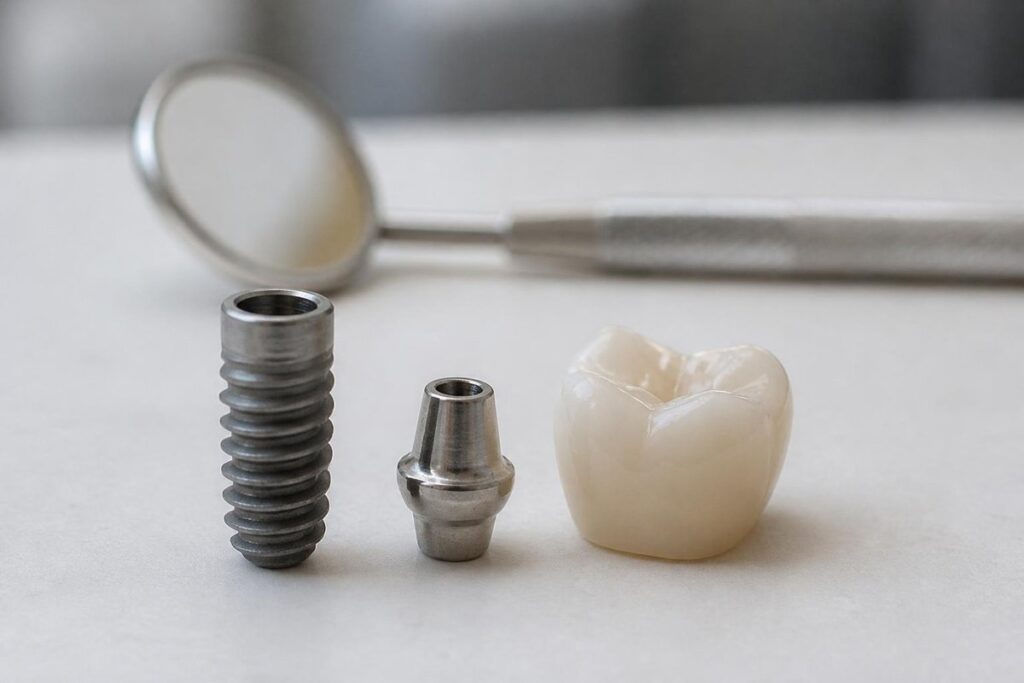
Are dental implants safe? For patients who are healthy enough for surgery, they are a well-established way to replace missing teeth, and the American Dental Association (ADA) says most patients find them secure and stable. They are still surgery, though, so they carry real risks, and they are not the right choice for everyone. A careful exam is the only way to know whether implants would be a sound choice for you.
This guide explains how implants are evaluated for safety, which risks are known, who may need extra care, and what we check at a consultation. It is general education and cannot replace an exam.
How Dental Implants Are Evaluated for Safety
The ADA’s MouthHealthy site describes implants as a popular and effective way to replace missing teeth, made of titanium and other materials that are compatible with the human body. The U.S. Food and Drug Administration (FDA) adds that most implant systems are made of titanium or zirconium oxide, and that these materials typically follow international standards. Biocompatibility testing is part of that evaluation, to show that contact with the body does not cause problems such as irritation or an allergic reaction. In the United States, a manufacturer must also show the FDA that a new system is as safe and effective as ones already on the market, as the FDA explains in Dental Implants: What You Should Know.
Safety also depends on planning. StatPearls, a medical reference hosted by the U.S. National Library of Medicine, says that knowing where the nerve canal in the lower jaw and the sinus in the upper jaw sit, and how wide and dense the bone is, is essential before an implant is placed. That is why a proper exam and imaging come first.
The Known Risks of Dental Implants
An implant is placed in the jawbone, so it is a surgical treatment. The FDA is clear that complications may sometimes occur, either soon after placement or much later. The Canadian Dental Association (CDA) calls complications rare, and lists bleeding, infection, numbness, and injury to nearby muscles or the sinus cavity. It adds that in some cases an implant does not bond to the bone. The FDA’s list of risks includes:
- Damage to the natural teeth next to the implant during placement
- Injury to surrounding tissue, such as a hole into the sinus, or a fracture of the jawbone
- Numbness after surgery from pressure on, or damage to, a nerve
- Infection in the gum and bone around the implant, which can make it loose
- Slower healing, which may be more likely in people who smoke
- A loose abutment screw, which can create a sensation that the tooth is loose or twisting in place
- A bite that does not feel normal, with the teeth not coming together as they should
- Difficulty cleaning around the implant, and untreated gum disease
Some of these problems lead to implant failure, which is usually defined as the implant becoming loose or being lost. Failure can mean another surgery to fix or replace the implant.
Who Needs Extra Care Before Implant Surgery
The CDA says implants may suit people who are in good general health, whose gums are healthy and whose jaw has enough bone to hold an implant. If the jawbone has shrunk, a bone graft may be possible. The ADA adds that your health is more of a factor than your age. For the full list of factors, see our guide to whether you are a candidate for dental implants.
From a safety point of view, these situations call for extra planning:
- Diabetes. The FDA says implant failure from infection may be more likely in people with uncontrolled diabetes, and the ADA says chronic illnesses such as diabetes may interfere with healing.
- Smoking or tobacco use. The FDA says smoking may affect healing and decrease the long-term success of the implant. The ADA agrees that tobacco can slow healing.
- Gum disease. The FDA lists untreated periodontal disease among the risks, and the CDA’s description of a good candidate includes healthy gums. Active gum disease is normally treated first, and our periodontal care page explains the treatment options.
- Certain conditions, medicines and treatments. The StatPearls reference mentioned above lists osteoporosis, bisphosphonate medicines, chemotherapy, and radiation to the head and neck among the conditions that call for extra caution before implant surgery.
- Too little bone. Low bone volume affects where and how an implant can be placed, which is why the CDA mentions bone grafting.
Having one of these does not automatically rule implants out, though in some cases it can. Some, such as gum disease or low bone volume, may be treated first. Others may mean implants are not the best option for you. The ADA notes that you may be medically evaluated by a physician before implant surgery is scheduled, so tell us about every medication you take, including those prescribed by other doctors. Do not stop or change a prescribed medicine on your own; talk with the doctor who prescribed it first.
How to Lower Your Risks
Your habits matter once an implant is in place. A few simple ones make a difference, and the FDA and the CDA point to most of them:
- Follow the cleaning instructions you are given. The FDA says regularly cleaning the implant and the surrounding teeth is very important for long-term success, and the CDA says implants need to be kept clean with a toothbrush and floss, like natural teeth.
- Keep your regular check-ups. The CDA says they let your dentist make sure that your bite is right and that your implants are not loose.
- If you smoke, ask us how it may affect your healing before you decide.
- If an implant ever feels loose or painful, tell your dentist right away, as the FDA advises.
Our article on the lifespan of dental implants covers daily care in more detail.
What We Check at a Consultation to Keep Treatment Safe
A consultation is where we assess whether implants are a sound choice for you, before any surgery is planned. At our office we examine your gums, remaining teeth, bite and bone, review your medications and health history, and use appropriate imaging before recommending a path. The CDA says the exam includes x-rays of your head, jaw and teeth to find out whether implants are right for you.

After the assessment we put the plan in writing and explain which parts of it can be completed through our office, who is responsible for each stage, and when a referral to a dental specialist is recommended. Our guide to what to expect at a dental implant consultation walks through the visit. Questions worth asking include:
- What are the risks in my case, given my health and medications?
- Which brand and model of implant system will be used? The FDA suggests asking this and keeping the answer for your records.
- Who will place the implant, and who will make the final tooth?
- Which follow-up visits will I need, and what should I do at home?
- What are my alternatives?
Warning Signs to Call Us About
Call us promptly if you notice any of these after treatment:
- An implant that feels loose or painful
- Swelling, or bleeding, that does not settle
- Numbness or an unusual sensation in or around your mouth that lasts longer than you were told to expect
- A change in how your teeth bite together
Call our office at (905) 420-1777 and describe what is happening. If you have trouble breathing or swallowing, or swelling that is spreading quickly, go to the nearest emergency department or call 911. You can read more about our emergency dental care.
If Implants Are Not Right for You
Implants are not the only way to replace a missing tooth. The CDA describes them as an alternative to bridges, partials and complete dentures. Our comparison of dental implants vs bridges and our guide to dentures vs implants explain how the options differ, so you can discuss them with your dentist.
Frequently Asked Questions
What are the risks of having dental implants?
The CDA lists bleeding, infection, numbness, and injury to nearby muscles or the sinus cavity, and notes that an implant may not bond to the bone. The FDA adds damage to nearby teeth, a loose abutment screw, and problems from poor cleaning or untreated gum disease. Your dentist can explain which of these apply to you.
Should a 70-year-old get dental implants?
Age alone does not decide it. The ADA says your health is more of a factor than your age, and that you may be medically evaluated by a physician before implant surgery. Whether implants suit you depends on your overall health, gums and bone, which an exam can check.
Can dental implants cause problems years later?
They can. The FDA says complications can occur soon after placement or much later. That is one reason cleaning at home and regular visits matter. If your implant feels loose or painful, tell your dentist right away.
Are dental implants safe if I have diabetes?
It depends on your overall health, including how well your diabetes is controlled. The FDA says implant failure from infection may be more likely in people with uncontrolled diabetes, and the ADA says chronic illnesses such as diabetes may interfere with healing. Talk with us and with your physician before deciding.
Are the materials in dental implants safe?
The FDA says most implant systems are made of titanium or zirconium oxide, that the safety profiles of these materials are well known, and that biocompatibility testing checks for irritation and allergic reaction. If you have a known metal allergy, tell us at your consultation.
Start With a Conversation About Implants
If you are weighing implants, a sensible first step is a consultation. Our team at Pickering Square Dental, on Kingston Rd in Pickering, can examine your mouth, explain the risks that apply to you, and talk through your options. Learn more about our dental implant services, or contact us to schedule a consultation.
This article is for educational purposes only and is not a substitute for personalized dental advice, diagnosis, or treatment. Always speak with a regulated dental professional about your specific concerns.

About Dr. Marvin Lean, DDS
Dr. Marvin Lean, DDS, is the owner and lead dentist at Pickering Square Dental. With decades of experience in family and laser dentistry, Dr. Lean provides care focused on clear communication and patient comfort. He is a member of the Ontario Dental Association (ODA) and the Canadian Dental Association (CDA). Dr. Lean and his team provide comprehensive dental care including sedation dentistry, dental implants, emergency dental care, and the Canadian Dental Care Plan (CDCP) to patients in Pickering, Ajax, Whitby, Scarborough, Oshawa, and Markham. Dr. Lean spent the last 20 years as the Dentist for the Toronto Maple Leafs.