Most of us glance at our tongue now and then, and a white or pale coating can be a bit of a surprise. In many cases it is harmless and clears up with a little extra care. In others it points to something that needs attention, so it helps to know what is common and what is not.
This guide explains the usual causes of a white tongue, how to care for it at home, when to see a dentist, and what a dental visit for this concern involves. It is general education and cannot replace an exam.
What a White Tongue Is
The surface of the tongue is covered in tiny bumps called papillae. Food particles, bacteria, and dead cells can collect between and around them, and when enough builds up the tongue takes on a white or pale coating. It is usually most noticeable toward the back of the tongue, and it often looks worse in the morning.
A coating that can be brushed or scraped away and stays away is usually a matter of hygiene or dryness. A coating that comes with soreness, patches that do not wipe off, or changes that linger deserves a closer look.
Common Causes of a White Tongue
Not Enough Daily Cleaning
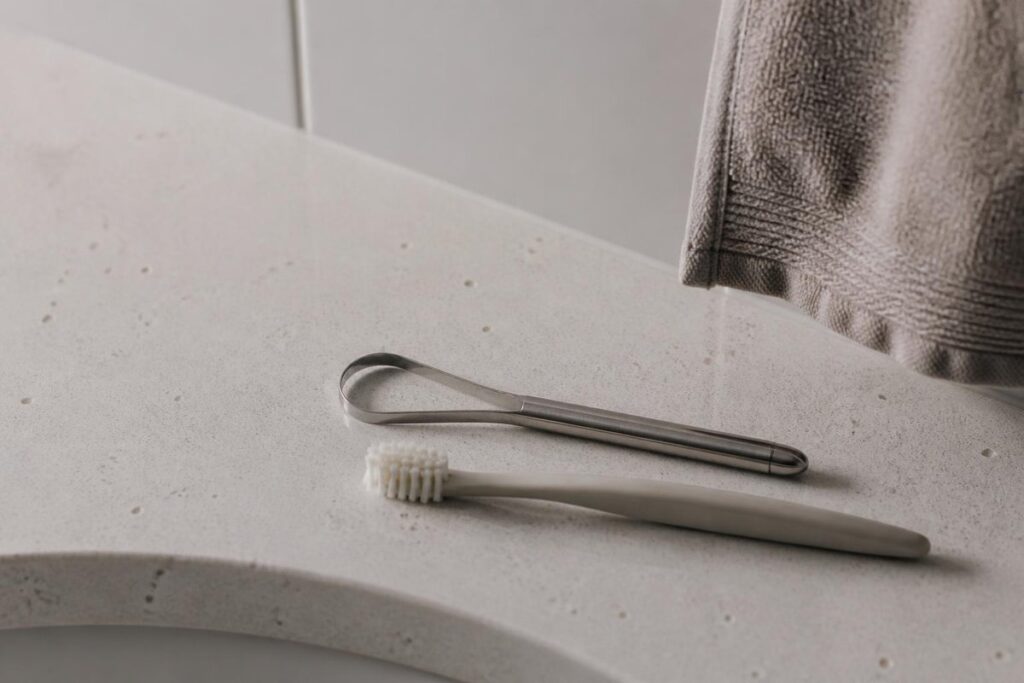
Brushing the teeth without cleaning the tongue leaves debris and bacteria in place. The NHS suggests gently cleaning your tongue once a day with a tongue scraper or cleaner as part of keeping bad breath under control, and the same step helps a coating build up less.
Dry Mouth and Mouth Breathing
Saliva helps rinse the tongue. When your mouth is dry, whether from medications, dehydration, or breathing through your mouth at night, debris lingers and the coating thickens. Our guide to dry mouth causes explains more about this.
Tobacco and Alcohol
Smoking and heavy alcohol use dry and irritate the tissues of the mouth and can contribute to a coated or patchy tongue.
Oral Thrush
Oral thrush is an overgrowth of a fungus called Candida. The NHS describes it as usually harmless and says that in adults the mouth looks red inside with white patches, and that wiping the patches off leaves red spots that can bleed. Other symptoms can include cracks at the corners of the mouth, an unpleasant taste, and a sore tongue or sore gums. Things that can make the fungus grow more than usual include taking antibiotics for a long time, using asthma inhalers, and having cancer treatment. Please do not stop a prescribed medication on your own; raise it with your physician or pharmacist. Dentures that do not fit well, or that are worn overnight, are another common trigger. The NHS page on oral thrush explains it in more detail.
Other Conditions
Some less common conditions also change the tongue’s appearance. Geographic tongue produces map-like patches that come and go. Leukoplakia produces white patches that do not wipe away and needs to be assessed. MedlinePlus lists both under its overview of tongue disorders, along with other changes in colour or texture. This is one more reason not to guess when a patch looks unusual or does not go away.
How to Care for a White Tongue at Home
If your tongue is coated but not sore, these steps usually help:
- Brush your tongue gently from back to front, or use a tongue scraper once a day, without pressing hard enough to cause bleeding.
- Brush your teeth twice a day with fluoride toothpaste and clean between them daily.
- Drink water regularly to keep your mouth moist.
- Avoid tobacco, and cut back on alcohol and alcohol-heavy mouthwashes.
- If you wear dentures, clean them every day and take them out at night, as the NHS advises.
- Keep up with regular dental checkups so changes are noticed early.
A coating that fades with steady cleaning is usually nothing to worry about, and one that does not is worth a closer look. Our guide to why tongue cleaning belongs in your routine explains the habit in more detail.

When to See a Dentist About a White Tongue
Schedule a visit if the coating has not cleared up with good cleaning, or sooner if you notice any of these:
- White patches that do not wipe away, or that bleed when you wipe them
- Soreness, burning, or pain in the mouth or on the tongue
- Difficulty swallowing or eating
- Cracks at the corners of the mouth, or an unpleasant taste that will not go away
- A patch that is thick, raised, or red and white together
The NHS notes that oral thrush is not usually serious, but suggests seeing a doctor if it does not improve after a week of treatment or if swallowing is difficult or painful. Persistent bad breath together with a coated tongue is also worth a visit, and our article on treating and preventing bad breath has more on that topic.
How Oral Thrush Is Treated
When thrush is the cause, it is generally treatable. The NHS says it can be treated with antifungal medicine. A dentist or physician can confirm the diagnosis and recommend or prescribe the right treatment, so please do not start treatment on your own, especially for a baby. See a doctor if there is no improvement after a week of treatment, or if you have difficulty or pain when swallowing. Good oral hygiene, cleaning dentures daily, and keeping up with regular checkups all help prevent a repeat.
What a Dental Visit Involves
Your dentist will ask when you first noticed the change, what medications you take, whether you smoke or wear dentures, and whether you have had other symptoms. They will examine your tongue, the rest of your mouth, and your teeth and gums. Depending on what they find, the next step could be simple coaching on tongue cleaning, treatment of a related dental problem, a suggestion to see your physician about a medication or health condition, or treatment for oral thrush. If a patch looks unusual or does not resolve, your dentist may recommend further assessment.

Frequently Asked Questions
Is a white tongue serious?
Usually not. A coating from hygiene, dryness, or tobacco is common and manageable. A white patch that will not wipe off or will not go away should be looked at.
Is a white tongue contagious?
A plain coating is not. The NHS says oral thrush in adults is not contagious. If you are unsure which one you have, ask a dentist or physician.
Can I scrape off a white tongue?
You can gently clean a coating with a soft toothbrush or a tongue scraper once a day. Scraping hard enough to cause bleeding is not helpful, and white patches that do not come off need a professional look instead.
Does a white tongue cause bad breath?
It can. The bacteria and debris in a thick coating are a common source of odour. Cleaning your tongue daily is one of the simplest ways to help.
Can dry mouth cause a white tongue?
Yes. With less saliva to rinse the tongue, debris sticks around and the coating builds up. Drinking water, avoiding tobacco, and asking your dentist or pharmacist about your medications can help.
Noticed Something Unusual on Your Tongue?
If your tongue has looked white or coated for a while, or if something about it worries you, our team at Pickering Square Dental would be glad to take a look. Learn more about our family dentistry care, or contact us to schedule an appointment.
This article is for educational purposes only and is not a substitute for personalized dental advice, diagnosis, or treatment. Always speak with a regulated dental professional about your specific concerns.

About Dr. Marvin Lean, DDS
Dr. Marvin Lean, DDS, is the owner and lead dentist at Pickering Square Dental. With decades of experience in family and laser dentistry, Dr. Lean provides care focused on clear communication and patient comfort. He is a member of the Ontario Dental Association (ODA) and the Canadian Dental Association (CDA). Dr. Lean and his team provide comprehensive dental care including sedation dentistry, dental implants, emergency dental care, and the Canadian Dental Care Plan (CDCP) to patients in Pickering, Ajax, Whitby, Scarborough, Oshawa, and Markham. Dr. Lean spent the last 20 years as the Dentist for the Toronto Maple Leafs.