Why Dental Bridge Cleaning Deserves Its Own Routine
A dental bridge restores the appearance and function of one or more missing teeth by anchoring an artificial tooth—called a pontic—to the natural teeth or implants on either side. Because the pontic sits directly above the gum tissue without a root passing through it, food particles and bacterial plaque can accumulate in the narrow space underneath. Effective dental bridge cleaning is essential for keeping the supporting teeth, gums, and surrounding bone healthy over the long term. Many patients find that their usual brushing and flossing habits need a few adjustments once a bridge is in place, and this guide walks through the tools and techniques that can help.
Understanding the Space Beneath a Pontic
When a bridge is cemented or secured, the pontic rests on or just above the gum ridge. Unlike a natural tooth, there is no gap between individual teeth that standard floss can slip through in the usual way. Instead, a continuous framework connects the pontic to the abutment crowns on each side. This design is what makes the bridge stable, but it also creates a sheltered channel where plaque, food debris, and bacteria can collect without being disturbed by normal brushing.
Over time, undisturbed plaque may harden into calculus (tarite), which cannot be removed at home and requires professional scaling. Persistent plaque accumulation around the abutment teeth may contribute to gum inflammation—sometimes noticed as redness, tenderness, or bleeding during brushing. If left unaddressed, these conditions could progress and potentially compromise the longevity of the bridge itself. That is why daily attention to the area beneath the pontic is so important.
Tools That Make Dental Bridge Cleaning Easier
Several purpose-designed tools can help you reach the space under your bridge. Your dental team can recommend the combination that suits your specific bridge design and manual dexterity.
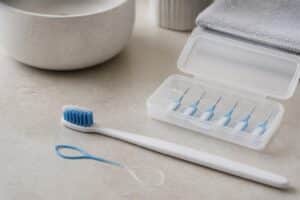
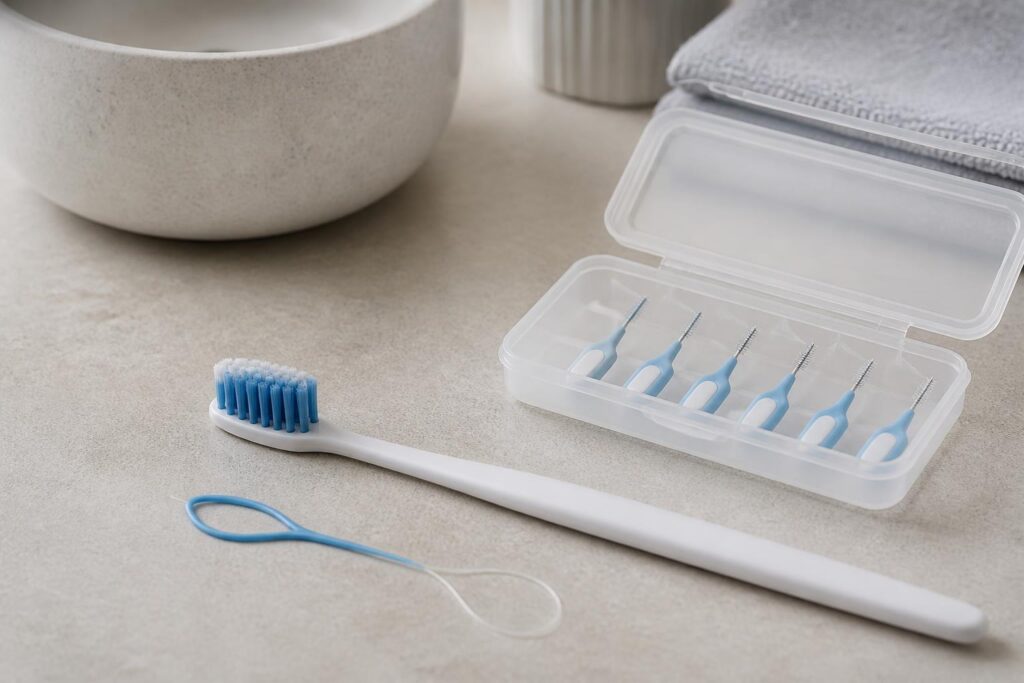
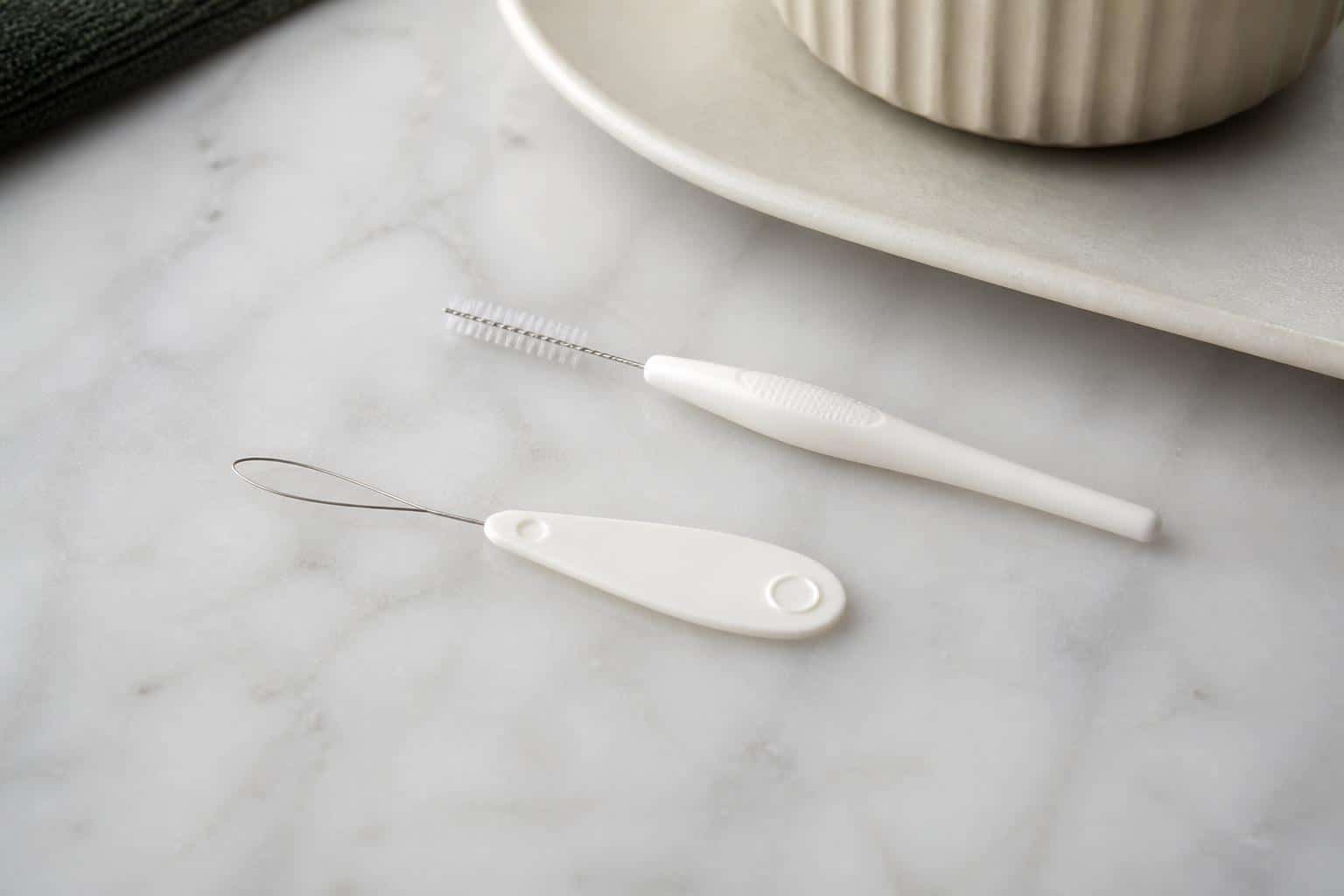
- Floss threaders: A floss threader is a flexible loop, similar to a large sewing needle, that guides regular floss beneath the pontic. Once the floss is threaded under the bridge, you can gently move it back and forth along the underside of the pontic and against the sides of the abutment teeth.
- Super floss: This product combines a stiffened end for threading, a spongy middle section for cleaning broad surfaces, and regular floss for the sides of the abutment teeth—all in one pre-cut strand.
- Interdental brushes: Small, cone-shaped brushes on a thin wire handle can slide into the space between the pontic and the gum tissue. They come in multiple sizes, so it is worth asking your dental hygienist which diameter fits your bridge comfortably.
- Oral irrigators (water flossers): A targeted stream of water can flush debris from beneath the pontic and along the gum line. An oral irrigator is a helpful supplement to—but generally not a complete replacement for—mechanical cleaning with floss or interdental brushes.
- Soft-bristle toothbrush: A standard soft-bristle brush remains your primary tool for cleaning the visible surfaces of the bridge and the surrounding teeth. Angling the bristles toward the gum line at roughly 45 degrees may help dislodge plaque along the margins of the abutment crowns.
A Step-by-Step Approach to Daily Cleaning
The following sequence is a general guide. Your dental team may suggest modifications based on the type and location of your bridge.
- Brush all surfaces first. Use a soft-bristle toothbrush with a fluoride toothpaste. Spend time on the outer, inner, and biting surfaces of the bridge and the teeth on either side.
- Thread floss beneath the pontic. Pass a floss threader or the stiff end of super floss under the bridge from one side. Gently pull the floss through until the spongy or regular section sits against the underside of the pontic.
- Clean the underside of the pontic. Using a gentle back-and-forth and slight up-and-down motion, move the spongy section or regular floss along the bottom of the pontic to lift away plaque and debris.
- Clean the abutment teeth. Slide the floss up against each abutment tooth, curving it into a C-shape, and move it gently below the gum line as you would with natural teeth.
- Use an interdental brush if recommended. Insert it carefully into the space beneath the pontic and move it in and out a few times. Avoid forcing a brush that feels too large.
- Rinse with an oral irrigator (optional). Direct the water stream along the gum line and under the bridge to flush any remaining particles.
- Consider an antimicrobial rinse. If your dental team has suggested a specific mouth rinse, use it after mechanical cleaning for the best effect.
Signs That Your Cleaning Routine May Need Adjustment
Even with consistent effort, you may notice changes that suggest the area under your bridge needs professional attention. Common observations include:
- Persistent bad taste or odour that does not resolve after thorough cleaning
- Gum tissue around the abutment teeth that appears red, swollen, or bleeds easily
- A feeling of roughness or hardened deposit on the underside of the pontic
- Sensitivity or discomfort in the abutment teeth when chewing
- A change in the way the bridge feels when you bite down
These observations do not necessarily indicate a serious problem, but they are worth mentioning at your next appointment so your dental team can assess the area and recommend any changes to your home-care routine.
The Role of Professional Maintenance
Home care is only one part of keeping a bridge in good condition. Professional cleanings allow your dental hygienist to remove calculus that forms in hard-to-reach areas, polish the bridge surfaces, and evaluate the health of the gum tissue and supporting bone. Your dentist may also check the fit and integrity of the bridge, looking for signs of wear, cement breakdown, or changes in the abutment teeth.
How often you should schedule professional maintenance visits depends on your individual oral health. Some patients benefit from appointments every four to six months, while others with a history of gum disease or higher plaque accumulation may be advised to come in more frequently. The Canadian Dental Association’s oral-health resources offer additional guidance on preventive care that applies to patients with bridges and other restorations.
If you are considering whether a dental implant might be an alternative or complement to a bridge in the future, our implant dentistry page provides an overview of how implant-supported restorations differ in terms of daily maintenance and long-term care.
Tips for Long-Term Bridge Care
Beyond daily cleaning, a few broader habits can support the longevity of your dental bridge:
- Avoid very hard or sticky foods on the bridge. Chewing ice, hard candies, or very sticky items directly on the pontic or abutment crowns may increase the risk of damage over time.
- Wear a night guard if recommended. Grinding or clenching during sleep can place excessive force on a bridge. If your dental team has suggested a night guard, wearing it consistently may help protect the restoration.
- Do not use your bridge as a tool. Opening packages, tearing tape, or biting non-food items can stress the framework and the abutment teeth.
- Stay consistent. The most effective cleaning routine is one you follow every day. Setting a reminder or keeping your bridge-cleaning tools visible in the bathroom can help build the habit.
A Note on the Canadian Dental Care Plan (CDCP)
If you are enrolled in or considering the Canadian Dental Care Plan, please confirm your current eligibility, coverage details, and any co-payment requirements directly with our office and with the official program. Coverage criteria can change, and our administrative team is happy to help you understand how the program may apply to your preventive and maintenance appointments.
Frequently Asked Questions
How often should I clean under my dental bridge each day?
Most dental professionals recommend cleaning beneath the pontic at least once a day, ideally before bed, so that plaque does not sit undisturbed overnight. Some patients find that cleaning after meals provides additional comfort and freshness. Your dental hygienist can suggest a frequency based on how quickly plaque tends to accumulate in your specific situation.
Can I use regular floss instead of a threader or super floss?
Regular floss can work if you use a floss threader to guide it beneath the bridge framework. Without a threader, standard floss cannot pass between the connected crowns the way it does between natural teeth. Super floss is a convenient alternative because it combines the threader and cleaning sections in a single strand, which some patients find faster and easier to manage.
What should I do if my gums bleed when I clean under the bridge?
Light bleeding when you first begin a new cleaning routine is not uncommon and may decrease as the gum tissue responds to more consistent plaque removal. However, if bleeding persists for more than a week or two, or if it is accompanied by swelling, pain, or an unpleasant odour, it is a good idea to schedule an assessment with your dental team so they can evaluate the tissue and rule out any underlying concerns.
Keeping your bridge clean and well-maintained starts with the right tools, a consistent routine, and regular professional support. If you have questions about dental bridge cleaning or would like your dental team to evaluate the fit and condition of your current bridge, we are here to help. Schedule your next appointment with Pickering Square Dental by calling (905) 420-1777 or visiting our contact page to request a convenient time.

About Dr. Marvin Lean, DDS
Dr. Marvin Lean, DDS, is the owner and lead dentist at Pickering Square Dental. With decades of experience in family and laser dentistry, Dr. Lean provides care focused on clear communication and patient comfort. He is a member of the Ontario Dental Association (ODA) and the Canadian Dental Association (CDA). Dr. Lean and his team provide comprehensive dental care including sedation dentistry, dental implants, emergency dental care, and the Canadian Dental Care Plan (CDCP) to patients in Pickering, Ajax, Whitby, Scarborough, Oshawa, and Markham. Dr. Lean spent the last 20 years as the Dentist for the Toronto Maple Leafs.