Why Night Guard Cleaning in Pickering Deserves a Routine of Its Own
If you wear a night guard to help manage grinding or clenching while you sleep, you already know it spends hours in close contact with your teeth, gums, and saliva every single night. Proper night guard cleaning in Pickering is an essential part of keeping the appliance comfortable, odour-free, and functioning the way your dental team intended. Unlike a toothbrush that you replace every few months, a custom night guard is designed to last—but only when it receives consistent care between professional check-ups. The steps are straightforward, and building them into your daily routine can help you get the most from your appliance over time.
What Happens When a Night Guard Is Not Cleaned Regularly
Your mouth naturally contains bacteria, and a night guard that sits against your teeth for several hours creates a warm, moist environment where those bacteria can multiply. Over time, you may notice a few telltale signs that your cleaning routine needs attention:
- Persistent odour — A night guard that smells unpleasant even after a quick rinse may have bacterial or mineral buildup that simple water cannot remove.
- Visible discolouration — Yellowish or cloudy patches on the surface can indicate plaque or calculus accumulation.
- Rough or gritty texture — Hard deposits may form on the appliance much the way tartar forms on natural teeth.
- Altered fit — Residue buildup can subtly change the way the guard seats against your teeth, which may reduce its effectiveness.
None of these observations necessarily mean something is wrong with your oral health, but they are good reasons to revisit your cleaning habits and, if the issue persists, to have your dental team take a closer look at the appliance during your next visit.
Daily Cleaning Steps You Can Follow at Home
A reliable daily routine does not require expensive products or a lot of time. The following steps can be completed in just a few minutes each morning after you remove your night guard:
- Rinse immediately. As soon as you take the guard out, hold it under cool or lukewarm running water to wash away saliva and loose debris. Avoid hot water, which may warp the material.
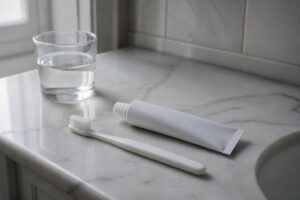
- Brush gently. Use a separate soft-bristle toothbrush—not the one you use for your teeth—and a small amount of mild, non-abrasive liquid soap or a cleanser recommended by your dental team. Brush every surface, including the inside, outside, and biting edges.
- Rinse again thoroughly. Make sure all soap residue is removed before you set the guard aside to dry.
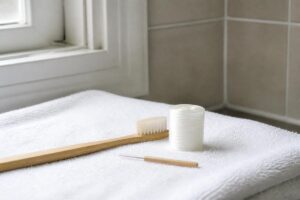
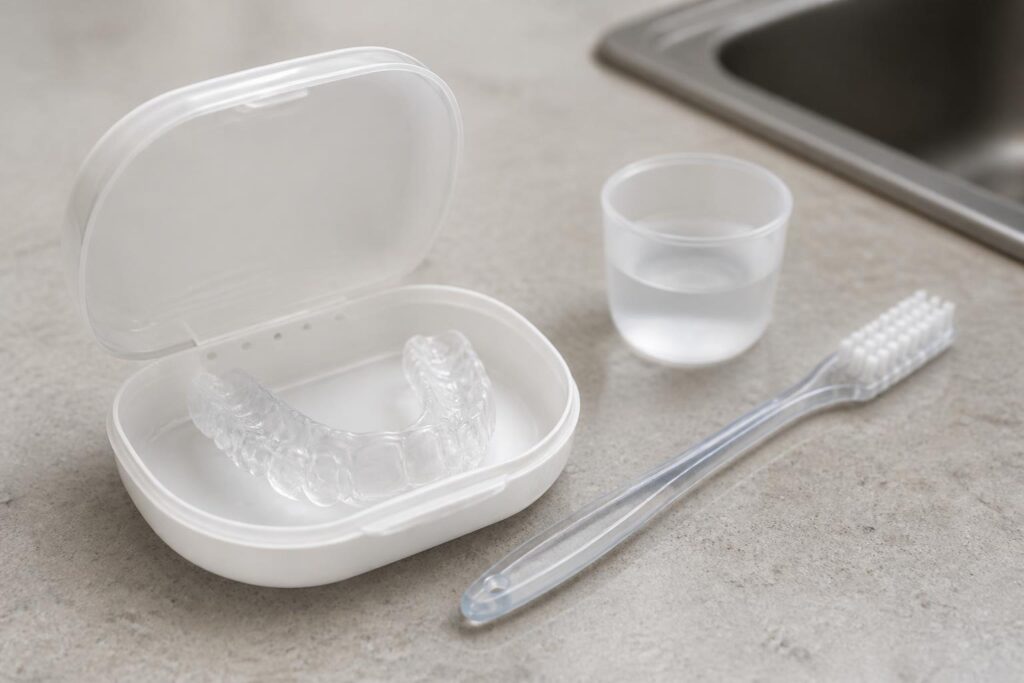
- Air-dry on a clean surface. Place the guard on a clean towel or in a ventilated case. Storing a damp night guard in a sealed container can encourage bacterial growth.
It is generally best to avoid regular toothpaste for cleaning a night guard. Many toothpastes contain mild abrasives that are safe for enamel but can scratch softer appliance materials, creating tiny grooves where bacteria may collect.
Weekly Deep-Cleaning Options Worth Considering
In addition to your daily routine, a weekly deep clean can help manage buildup that a toothbrush alone may not fully address. Two common approaches include:
- Denture or retainer cleaning tablets. Dissolve a tablet in a glass of cool water according to the package directions, then soak the night guard for the recommended time. Rinse well afterward.
- White vinegar and water soak. A solution of roughly equal parts white vinegar and cool water, used for about 15 to 30 minutes, may help loosen mineral deposits. Follow with a thorough rinse.
If you are unsure which method is most appropriate for your particular appliance material, your dental team at our family dentistry practice can offer guidance tailored to the type of night guard you have.
Storage and Handling Habits That Help Preserve Your Appliance
How you store your night guard between uses is just as important as how you clean it. A few practical habits can extend the life of the appliance and help keep it hygienic:
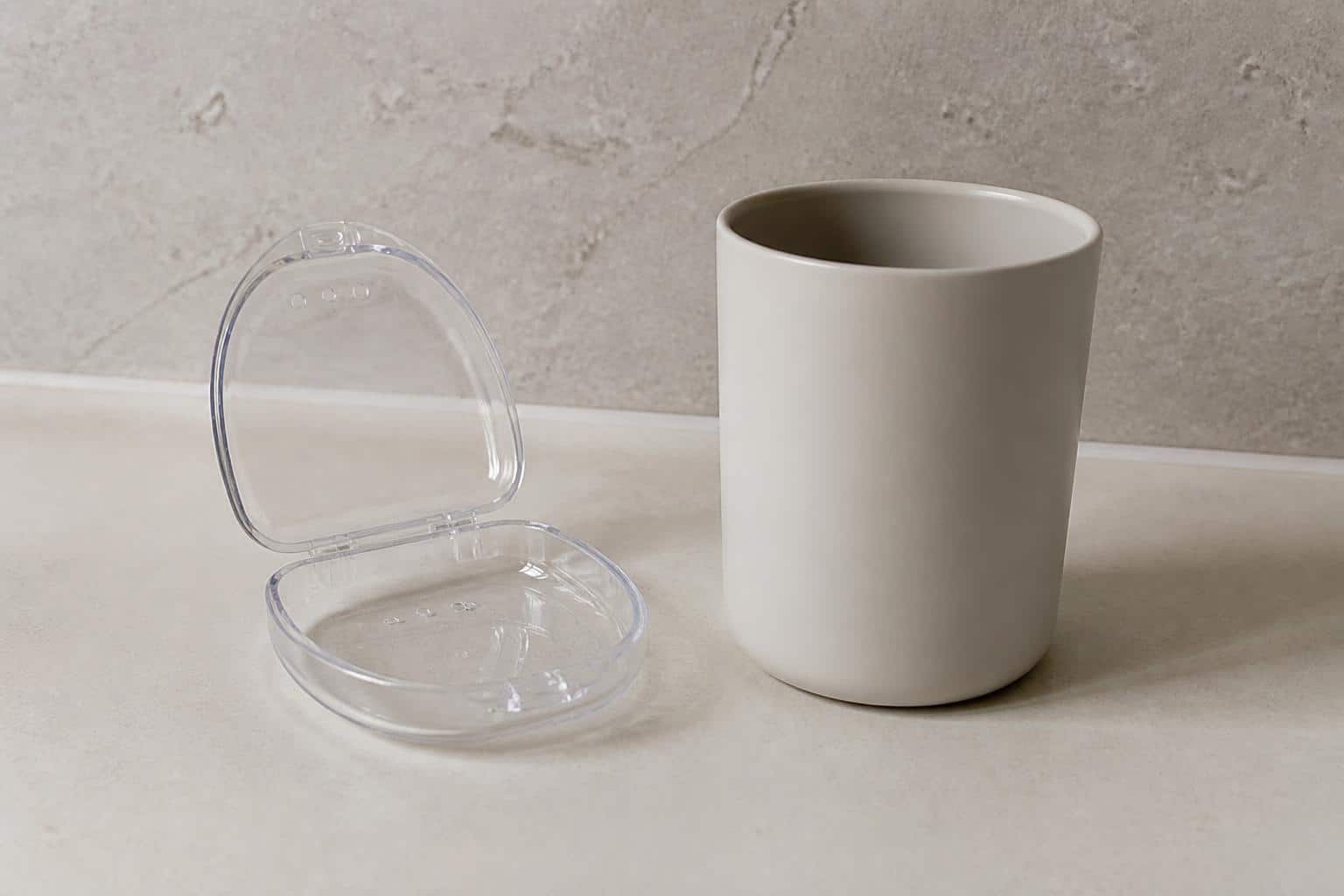
- Use a ventilated case. Cases with small holes or mesh panels allow airflow and help the guard dry completely between uses.
- Keep the case clean. Wash the case itself with soap and water at least once a week, and let it air-dry before placing the guard back inside.
- Store away from heat. Leaving a night guard on a sunny windowsill, in a hot car, or near a heat source may distort its shape.
- Keep it away from pets. Dogs in particular are often attracted to the scent of a worn night guard and may chew or damage it.
When travelling, bring your ventilated case along and maintain the same rinse-brush-dry routine you follow at home. Skipping a few days of cleaning while on vacation can lead to noticeable buildup by the time you return.
Signs It May Be Time for a Professional Assessment
Even with diligent home care, there are situations where your dental team should evaluate the appliance. Consider scheduling an appointment if you observe any of the following:
- Cracks, chips, or visible wear patterns on the biting surface
- A change in fit—the guard feels loose, tight, or shifts during the night
- Persistent odour or discolouration that does not respond to cleaning
- Hard deposits you cannot remove with gentle brushing or soaking
- Any new discomfort in your jaw, teeth, or gums that seems related to wearing the guard
Your dental team can professionally clean the appliance using methods that are not available at home, assess its structural integrity, and determine whether an adjustment or replacement may be appropriate. The Canadian Dental Association’s oral health resources also offer helpful general guidance on maintaining dental appliances and overall oral hygiene.
A Note About the Canadian Dental Care Plan (CDCP)
If you are enrolled in the Canadian Dental Care Plan, you may wonder whether night guard–related services could be included under the program. Because eligibility, coverage details, and any co-payment requirements can vary, we encourage you to confirm your current status directly with our office and with the official program. Our team is happy to help you understand what documentation may be needed.
Frequently Asked Questions
Can I use mouthwash to clean my night guard?
Some alcohol-based mouthwashes may dry out or discolour certain appliance materials over time. If you prefer using a mouthwash-based soak, ask your dental team whether the specific product you have in mind is compatible with your night guard’s material. A mild, alcohol-free rinse is generally a gentler option, though soap and water remain the most commonly recommended daily approach.
How often should I bring my night guard in for a professional cleaning?
Many dental professionals suggest having the appliance examined and cleaned at each routine hygiene appointment—typically every six to nine months, depending on your individual recall schedule. If you notice heavy buildup, odour, or fit changes before your next scheduled visit, it is a good idea to contact the office sooner rather than waiting.
Is it normal for a night guard to develop a slight smell even with regular cleaning?
A faint residual scent can sometimes occur, especially in appliances made from certain softer materials. However, a strong or persistent odour despite consistent cleaning may suggest bacterial colonisation that home methods are not fully addressing. In that case, a professional evaluation can help determine whether the guard needs a deeper clean or whether replacement should be considered.
Schedule Your Night Guard Check-Up at Pickering Square Dental
Consistent night guard cleaning in Pickering is one of the simplest ways to protect both your appliance and your oral health between visits. If you have questions about your cleaning routine, notice changes in your night guard’s condition, or are simply due for a check-up, our team is here to help. Contact Pickering Square Dental or call us at (905) 420-1777 to schedule your next appointment. We look forward to helping you keep your night guard—and your smile—in great shape.

About Dr. Marvin Lean, DDS
Dr. Marvin Lean, DDS, is the owner and lead dentist at Pickering Square Dental. With decades of experience in family and laser dentistry, Dr. Lean provides care focused on clear communication and patient comfort. He is a member of the Ontario Dental Association (ODA) and the Canadian Dental Association (CDA). Dr. Lean and his team provide comprehensive dental care including sedation dentistry, dental implants, emergency dental care, and the Canadian Dental Care Plan (CDCP) to patients in Pickering, Ajax, Whitby, Scarborough, Oshawa, and Markham. Dr. Lean spent the last 20 years as the Dentist for the Toronto Maple Leafs.