
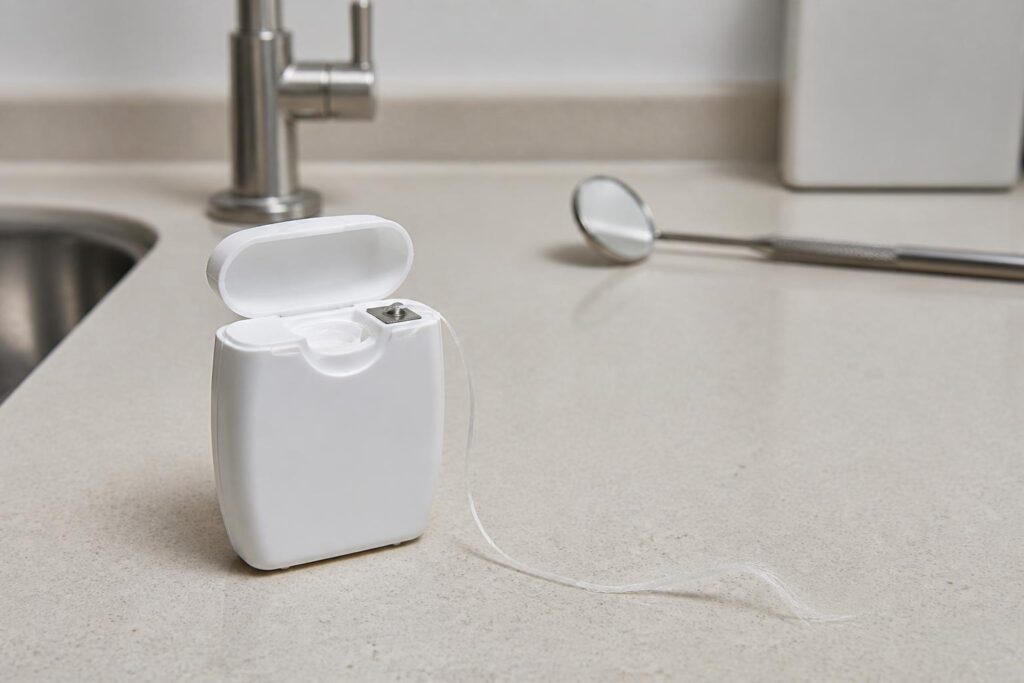
You slide the floss between two back teeth, and suddenly a strand tears off and stays wedged there. Or the floss keeps fraying every time you reach the same spot. It’s a small daily annoyance, but when floss shreds between teeth in the same place again and again, it’s usually your mouth telling you something specific. The catch itself isn’t a diagnosis, but it is a useful clue worth paying attention to and mentioning at your next visit. This article walks through what to notice, common non-diagnostic reasons floss may snag, safe technique checks, and how to describe the issue to your dental team.
What to Notice When Floss Catches or Frays
Before assuming anything is wrong, spend a few days paying attention to the pattern. The details you gather will help both you and your dental team understand what’s happening. A single snag on a busy morning is different from a strand that shreds in the same contact every night for two weeks.
Try to note the following as you floss:
- Location. Which two teeth is the floss catching between? Upper or lower, front or back, left or right?
- Consistency. Does it happen every time, or only occasionally?
- Direction. Does the floss shred going down between the teeth, coming back up, or when you curve it against one specific tooth?
- Sensation. Is there tenderness, bleeding, a rough edge you can feel, or is it painless?
- Odour or taste. Does the area have a persistent smell or taste even after cleaning?
- Food trapping. Do you also find food packing into that same space during meals?
You don’t need to solve the puzzle yourself. Simply having this information ready makes the conversation with your dental team more productive and helps them examine the right area carefully.
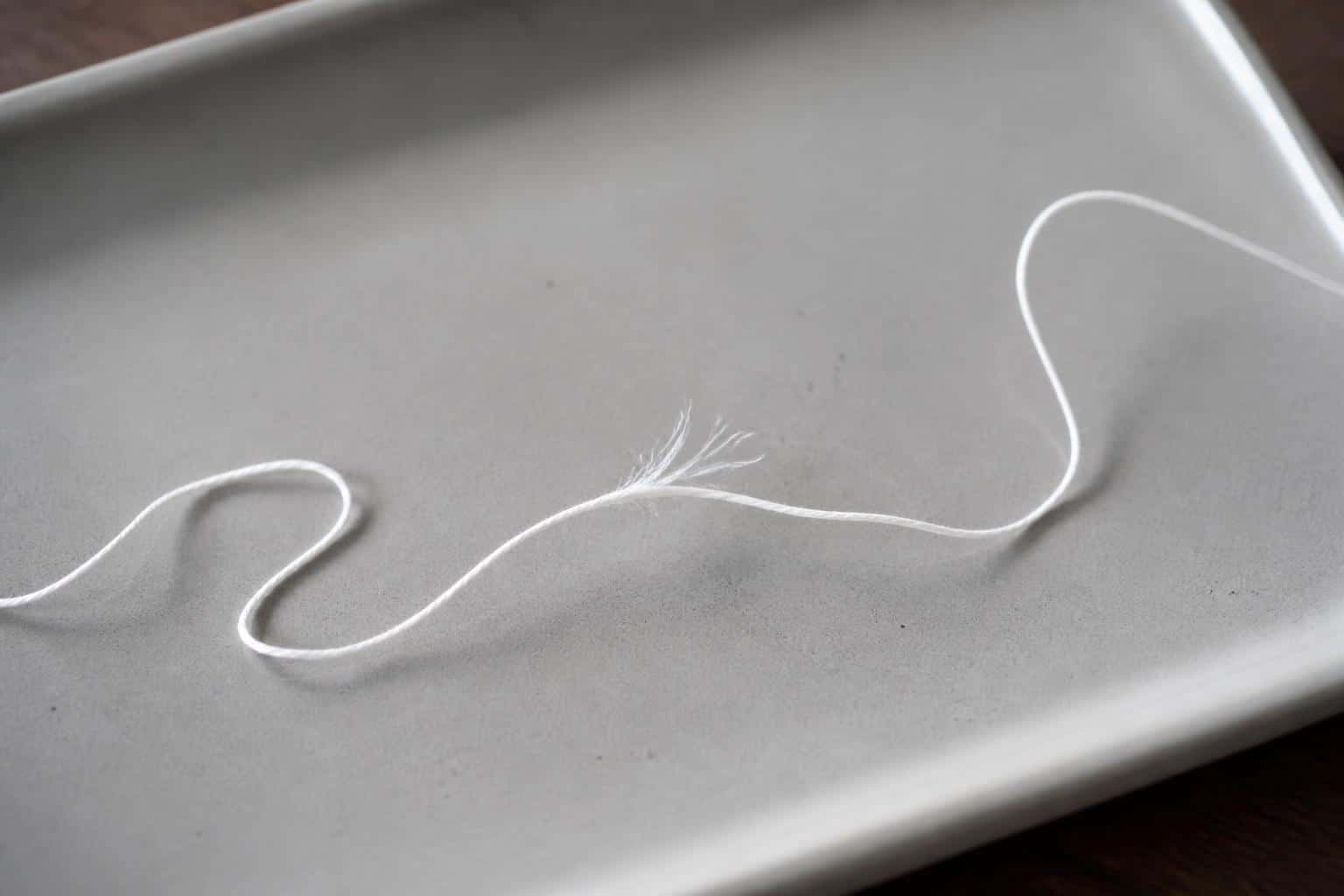
Possible Reasons Floss Shreds Between Teeth
There are several general explanations for why floss might catch or tear in a particular spot. None of these are diagnoses you can confirm at home, but understanding the range of possibilities helps you take the symptom seriously without jumping to conclusions.
Rough or Irregular Tooth Surfaces
Teeth aren’t perfectly smooth. Small chips on the biting edge, a slightly rough contact point, or the natural anatomy of a molar can catch on the fibres of floss. Sometimes a rough spot is minor and cosmetic; other times it’s worth having a professional look at it to decide whether anything should be done.
Edges of Existing Dental Work
Fillings, crowns, veneers, and bridges have margins where the restorative material meets natural tooth. Over years of chewing, an edge can develop a slight overhang or wear pattern that catches floss. This doesn’t automatically mean the restoration has failed, but it is one of the reasons your dental team checks the margins of existing work at recall appointments.
Tight or Open Contacts
Contact points between teeth can be tight enough that floss snaps through and frays, or loose enough that food and floss both drag through without cleanly wiping the surfaces. Bite changes, shifting, or previous dental work can all influence how neighbouring teeth meet.
Changes at the Gum Line
Tissue health around a specific tooth can influence how floss behaves in that space. Swelling, tenderness, or changes in the gum contour may be part of the picture. This is something to describe rather than self-diagnose — the Canadian Dental Association’s oral health resources offer general background on gum health, and a clinical assessment is the reliable way to know what’s actually going on in a specific spot.
Product and Technique Factors
Not every explanation is about your teeth. A very thin, unwaxed floss shreds more readily than a coated or PTFE-style floss. Sawing hard against a tight contact also increases fraying. These are worth ruling out before assuming the problem is structural.
Safe Technique Checks Before Your Next Visit
If your usual floss is catching, a few careful adjustments can help you tell whether the issue is mostly technique-related or whether it persists no matter what you try. These are checks, not fixes for an underlying problem.
- Guide the floss gently through the contact. Rather than snapping it down, ease it through with a slight side-to-side motion until it slips past the tight point.
- Curve the floss into a C-shape against each tooth. Slide it up and down the side of one tooth, then re-curve it against the neighbouring tooth. This is gentler on the tissue than a straight sawing motion.
- Try a different type of floss. A coated, waxed, or PTFE-style floss glides through tight contacts with less shredding. If a smoother floss stops fraying at the same spot, the contact may simply be tight rather than damaged.
- Consider floss picks or interdental brushes carefully. These can be useful, but they don’t always tell you the same thing that stringed floss reveals about a specific contact. If you normally use picks, try string floss in that spot to compare.
- Don’t force it. If a space is painful, bleeding heavily, or the floss simply won’t pass without violence, stop and make a note to mention it.
If the same shredding happens across multiple floss types and gentle technique, that’s a helpful piece of information on its own. It suggests the surface, not just the string, is worth examining. General flossing tips from the ADA’s MouthHealthy A-to-Z resource can be useful background reading, though nothing online replaces an in-person look.
How to Describe the Problem at Your Next Appointment
When you mention the issue to your dental team, specific details help more than general complaints. “My floss shreds” is a start; “my floss shreds every time between my upper right back molars, always on the back tooth, and I can feel something rough with my tongue” is far more useful.
Here’s what to bring up:
- The exact location, using your own words — “top left, second from the back” is perfectly clear.
- How long it’s been happening and whether it started suddenly or gradually.
- Whether you’ve had any dental work in or near that area, even years ago.
- Whether food also packs into that space.
- Any sensitivity to cold, sweet, or biting pressure in that tooth.
- What you’ve already tried — different floss types, gentler technique, etc.
Your dental team may want to examine the contact directly, check any existing restorations, take a look at the tissue around it, and sometimes use imaging to see between the teeth. The plan from there depends entirely on what they find during that assessment, which is why non-diagnostic language matters here — the shredding is a signal to investigate, not a verdict on its own.
If it’s been a while since your last checkup, or if this is one of several small things you’ve been noticing, it may be a good moment to schedule a general assessment. Our family dentistry page outlines the kind of routine care and check-ins that are a natural place to raise concerns like this one, and you can find a broader overview on our services page if you want a sense of what an examination visit typically includes.
Frequently Asked Questions
Is it normal for floss to occasionally shred?
An occasional catch, especially in a new area or on a busy day, isn’t necessarily a concern on its own. What’s worth paying attention to is a pattern: the same location, day after day, regardless of technique or floss type. That kind of consistency is the useful signal to mention at your next dental visit.
Should I stop flossing that spot if it keeps tearing?
Skipping the spot altogether usually isn’t ideal, because that area still needs to be cleaned. Instead, try a smoother, coated floss and use gentle technique to clean the surfaces without forcing the string through. If flossing that space is painful or causes noticeable bleeding, make a note and mention it at your appointment rather than continuing to fight with it.
Does shredding floss always mean I have a cavity?
No. There are several possible reasons floss may fray, and only a clinical examination can determine what’s actually going on in a specific spot. Rough enamel, the edge of an older restoration, a tight contact, or other factors can all contribute. That’s why the goal here is to notice and describe the pattern rather than self-diagnose.
Can changing my floss really make a difference?
Sometimes, yes. A thin, unwaxed floss can shred against a tight contact where a coated or PTFE-style floss slides through cleanly. If switching floss solves the problem entirely, that’s useful information. If shredding continues across different floss types and careful technique, that’s also useful information — and worth sharing with your dental team.
If floss keeps catching in the same spot and you’d like a professional to take a look, the team at Pickering Square Dental is happy to discuss scheduling an examination. Call (905) 420-1777 or reach out through our contact page to arrange a visit that fits your schedule.

About Dr. Marvin Lean, DDS
Dr. Marvin Lean, DDS, is the owner and lead dentist at Pickering Square Dental. With decades of experience in family and laser dentistry, Dr. Lean provides care focused on clear communication and patient comfort. He is a member of the Ontario Dental Association (ODA) and the Canadian Dental Association (CDA). Dr. Lean and his team provide comprehensive dental care including sedation dentistry, dental implants, emergency dental care, and the Canadian Dental Care Plan (CDCP) to patients in Pickering, Ajax, Whitby, Scarborough, Oshawa, and Markham. Dr. Lean spent the last 20 years as the Dentist for the Toronto Maple Leafs.