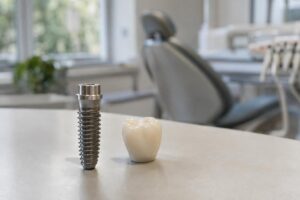

Dental implants are designed as a long-term way to replace missing teeth, but they still depend on good daily care and regular professional oversight. Whether your implant was placed last month or years ago, a steady routine is the best way to protect the implant and the gums and bone that support it. At Pickering Square Dental, we help patients build that routine and watch for early signs of trouble.
These dental implant maintenance tips cover the basics. Brush gently twice a day with a soft-bristled toothbrush. Clean between your teeth and around the implant every day with the tools your dentist recommends. Keep your gums healthy. Avoid habits that can damage the crown. Come in for regular check-ups and professional cleanings. Each point is explained below.
Daily Cleaning for Dental Implants

Plaque can build up around an implant just as it does around natural teeth, and the gums around it can become inflamed when it does. Daily cleaning is one of the most useful things you can do between visits.
- Brush twice a day with a soft-bristled toothbrush, angling the bristles gently toward the gumline around each implant.
- Choose a low-abrasive toothpaste. Ask us which toothpaste is gentlest on your crown at your next visit.
- Clean between and around your teeth every day. Depending on your implant and how your gums sit, that may mean implant-friendly floss or tape, an interdental brush, a soft pick or a water flosser. Your dentist or hygienist can show you which tool fits your mouth.
- Ask before adding a mouthwash. An antibacterial rinse can help some patients, but it is not a replacement for brushing and cleaning between teeth.
A few practical habits make the routine easier to keep. Clean around your implants at the same time each day so it becomes automatic. Use gentle pressure, because scrubbing hard can irritate the gums without making the area any cleaner. Replace your toothbrush head when the bristles fray, and bring your usual tools to a visit if you would like us to check your technique. If you wear a partial denture or bridge that attaches to implants, ask us how to remove and clean it so no area is missed.
Warning Signs to Watch For
Gum disease starts with plaque, and the earliest stages are often reversible with good daily cleaning and professional care. Tell us promptly if you notice any of the following around an implant:
- Gums that bleed, look red or feel swollen or tender
- A persistent bad taste or bad breath that does not go away with brushing
- Discomfort when you bite or chew
- An implant crown that feels loose, or a change in how your teeth fit together
These signs do not always mean something serious, but early attention gives us more treatment options. If you are experiencing severe pain, facial swelling or fever, contact our office as soon as you can during office hours, or seek urgent medical care if you cannot reach us.
Regular Check-Ups and Professional Cleanings
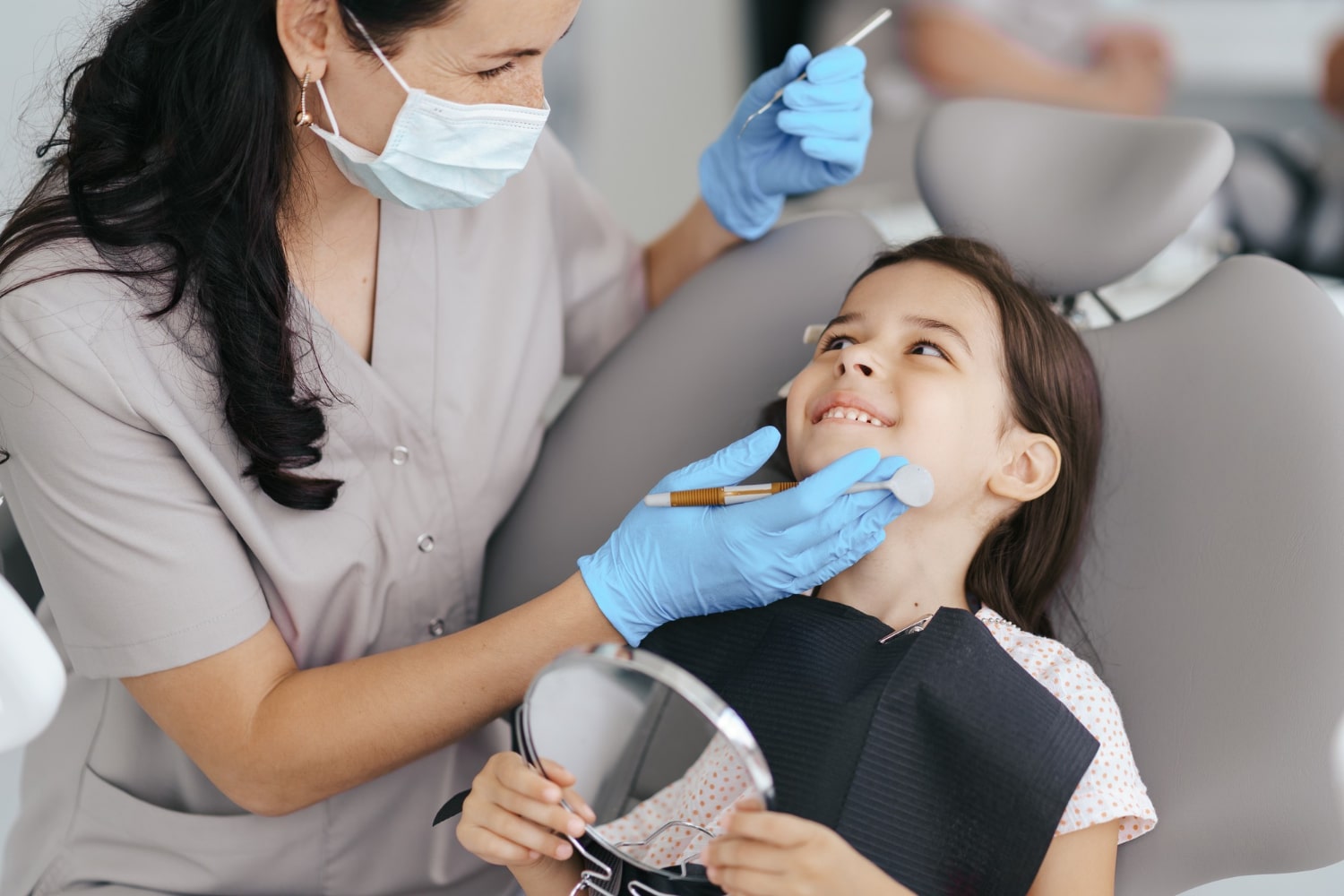
Even a careful home routine cannot do everything. Only a professional cleaning by a dentist or dental hygienist can remove hardened tartar, and routine visits let us check the gums, the bite and the implant crown for early changes. Your dentist will recommend how often you should be seen based on your gum health and overall needs.
At an implant check-up, you can generally expect:
- A look at the gums around each implant for redness, swelling or bleeding
- A check of the implant crown and how your teeth bite together
- A professional cleaning around your teeth and implants
- A review of your home care routine, with tips tailored to you
- X-rays or other imaging only when your dentist decides they are needed
These visits are also a good time to review your technique, ask about the tools you are using and raise any concerns. If it is time for your next check-up, you can schedule an appointment with our Pickering team.
Long-Term Habits That Protect Your Implants
- Avoid chewing hard objects such as ice, hard candy or pen caps, which can chip or fracture a crown.
- Do not use tobacco. The National Institute of Dental and Craniofacial Research (NIDCR) identifies smoking and tobacco use as the most significant risk factor for gum disease, and healthy gums matter just as much around an implant. If you would like to quit, tell your dental team and your doctor.
- Ask about a night guard if you clench or grind your teeth. Grinding can put extra force on your teeth and restorations.
- Keep your overall health in view. Let us know about new medications or health changes, since they can affect your gums and healing.
Caring for Your Implants Is a Partnership
Successful implant care is a partnership between you and your dental team. Consistent home care, regular visits and prompt attention to changes all help your implants do their job. If you have questions about your dental implants or are considering them, we are happy to talk through your options at a consultation.
Helpful Resources
For more information, visit the American Dental Association’s MouthHealthy page on dental implants and the NIDCR overview of periodontal (gum) disease.
Schedule Your Appointment Today
Contact Pickering Square Dental to schedule an appointment with Dr. Marvin Lean. Call us at (905) 420-1777 or visit us at 1450 Kingston Rd, Unit #4, Pickering, ON.
Frequently Asked Questions
How long do dental implants last?
Dental implants are designed as a long-term solution, and with good daily care and regular dental check-ups many last for many years. How long yours lasts depends on your oral hygiene, gum health, habits and overall health, so your dentist can give you an honest outlook for your situation.
Are dental implants painful?
Most patients report less discomfort than expected. The procedure is performed under local anaesthesia, and sedation options are available. Post-procedure soreness typically resolves within a few days with over-the-counter pain relief.
Am I a candidate for dental implants?
Many adults in good general health are candidates for dental implants. You need healthy gums and enough jawbone to support the implant. We will assess your bone health and overall suitability during a consultation at our Pickering office.

About Dr. Marvin Lean, DDS
Dr. Marvin Lean, DDS, is the owner and lead dentist at Pickering Square Dental. With decades of experience in family and laser dentistry, Dr. Lean provides care focused on clear communication and patient comfort. He is a member of the Ontario Dental Association (ODA) and the Canadian Dental Association (CDA). Dr. Lean and his team provide comprehensive dental care including sedation dentistry, dental implants, emergency dental care, and the Canadian Dental Care Plan (CDCP) to patients in Pickering, Ajax, Whitby, Scarborough, Oshawa, and Markham. Dr. Lean spent the last 20 years as the Dentist for the Toronto Maple Leafs.