
Periodontal Care in Pickering
When do bleeding gums need periodontal care?
Periodontal care in Pickering addresses inflammation and infection affecting the gums and the structures that support your teeth.

Six signs that deserve an assessment
Gum disease can advance with little discomfort, so a painless mouth isn't proof that the gums are healthy.

How is gum disease assessed?
Assessment can include your health and smoking history, a visual examination, measurements around the teeth, appropriate X-rays, and a review of plaque, tartar, bleeding, recession, and tooth mobility.
These findings help distinguish early gingivitis from more advanced periodontal disease and guide the recommended level of care.
What treatment may be recommended?
The level of care follows the findings — not a fixed package.
Cleaning and daily plaque removal
Early care often focuses on professional cleaning and improved daily plaque removal.
Scaling and root planing below the gumline
May require treatment below the gumline, closer maintenance intervals, or specialist treatment.
Individualized maintenance
The interval is individualized and may change as the gums respond.
If the findings call for care beyond the office's current scope, we will explain why a referral to an appropriate dental specialist is recommended. A periodontist has advanced university training in gum disease and the supporting tissues around teeth.
What can you do between periodontal visits?
Daily plaque control remains essential even when professional treatment is needed. Brush as directed, clean between the teeth with the method recommended for your spaces and restorations, and avoid tobacco.
If a particular area bleeds, don't simply ignore it; ask the dental team to demonstrate a safe technique and check whether tartar, recession, or a deeper pocket is present.
Gum health can also change when any of these change. Share relevant health information so the maintenance plan reflects your current risk rather than an old schedule.
Frequently asked questions about periodontal care
Clinical team: Dr. Marvin Lean. Last updated: July 27, 2026.
This page is general information about periodontal care and is not a diagnosis, treatment plan, or medical advice. The level of treatment, maintenance interval, and any referral are decided for your own findings after an assessment. Contact the office about symptoms or questions specific to your care.
Can bleeding gums improve with brushing and flossing alone?
Improved daily plaque removal can help early gingivitis, but bleeding can also signal tartar below the gumline or more advanced disease that home care can't remove. A dental assessment is the right way to determine what is causing the bleeding.
Is gum disease curable?
Early gum disease, called gingivitis, can be reversed with daily plaque removal and professional cleaning. Periodontitis involves damage to the bone and tissues that support teeth; that damage cannot be reversed, but professional treatment and ongoing home care can help slow or manage the disease. A gum assessment can identify the stage and the care you need.
What is scaling and root planing?
Scaling removes plaque and tartar from tooth surfaces above and below the gumline. Root planing smooths contaminated root surfaces so the area can be cleaned and the tissues can heal; the amount of treatment and follow-up depend on the periodontal findings.
Why might periodontal maintenance be more frequent than a regular cleaning?
After gum disease treatment, closer maintenance can help monitor pocket depths, inflammation, plaque, and areas that are difficult to clean. The interval is individualized and may change as the gums respond.
When is a periodontist involved?
A periodontist has advanced university training in gum disease and the supporting tissues around teeth. Specialist care may be recommended for advanced disease, complex treatment, regenerative procedures, or concerns that don't respond to routine care.
Related care
Ask for a gum assessment if you notice bleeding, swelling, recession, or a loose tooth.
When do bleeding gums need periodontal care?
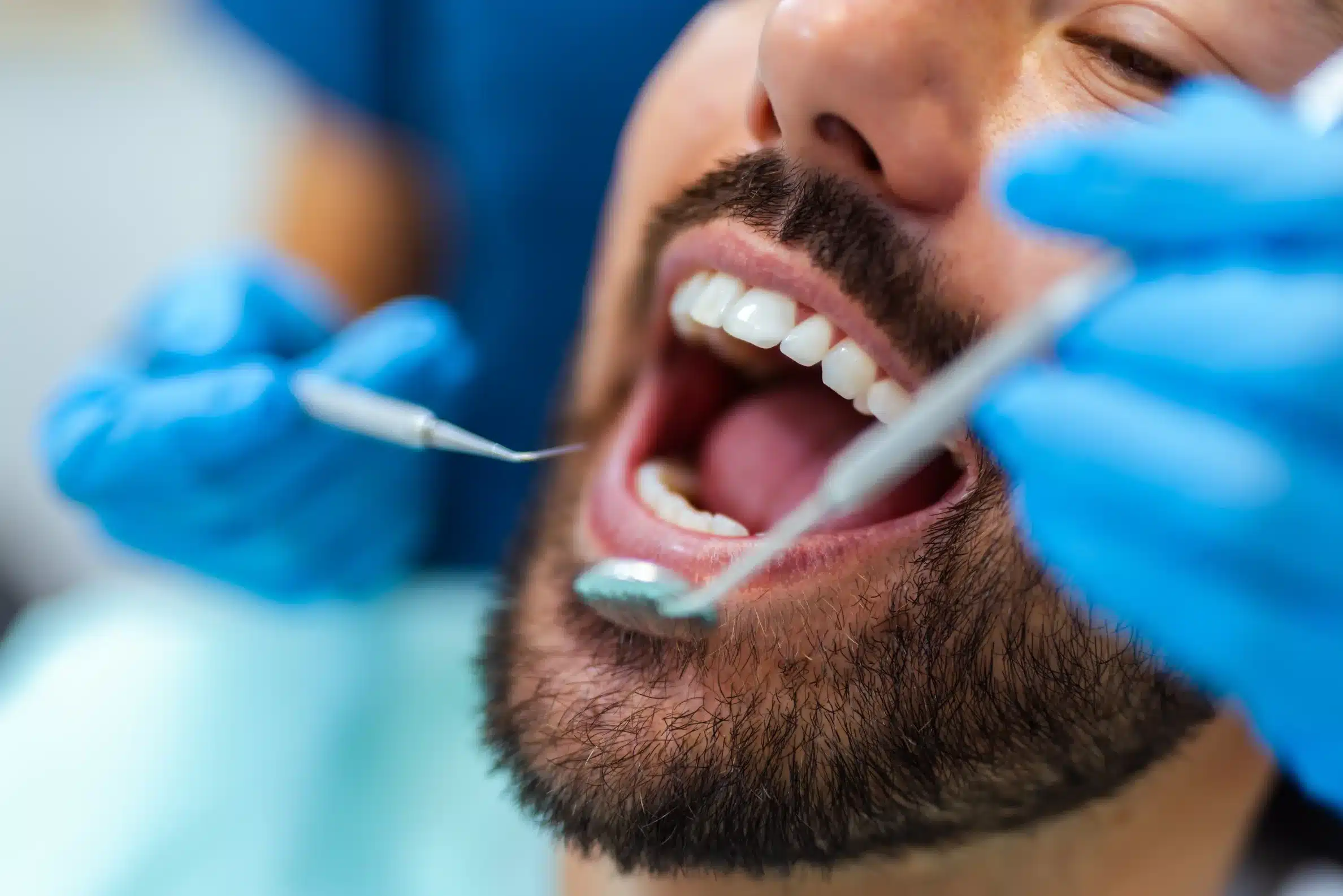
Periodontal care in Pickering addresses inflammation and infection affecting the gums and the structures that support your teeth.
Six signs that deserve an assessment
Gum disease can advance with little discomfort, so a painless mouth isn't proof that the gums are healthy.
How is gum disease assessed?
Assessment can include your health and smoking history, a visual examination, measurements around the teeth, appropriate X-rays, and a review of plaque, tartar, bleeding, recession, and tooth mobility.
These findings help distinguish early gingivitis from more advanced periodontal disease and guide the recommended level of care.
What treatment may be recommended?
The level of care follows the findings — not a fixed package.
Cleaning and daily plaque removal
Early care often focuses on professional cleaning and improved daily plaque removal.
Scaling and root planing below the gumline
May require treatment below the gumline, closer maintenance intervals, or specialist treatment.
Individualized maintenance
The interval is individualized and may change as the gums respond.
If the findings call for care beyond the office's current scope, we will explain why a referral to an appropriate dental specialist is recommended. A periodontist has advanced university training in gum disease and the supporting tissues around teeth.
What can you do between periodontal visits?
Daily plaque control remains essential even when professional treatment is needed. Brush as directed, clean between the teeth with the method recommended for your spaces and restorations, and avoid tobacco.
If a particular area bleeds, don't simply ignore it; ask the dental team to demonstrate a safe technique and check whether tartar, recession, or a deeper pocket is present.
Gum health can also change when any of these change. Share relevant health information so the maintenance plan reflects your current risk rather than an old schedule.
Frequently asked questions about periodontal care
Clinical team: Dr. Marvin Lean. Last updated: July 27, 2026.
This page is general information about periodontal care and is not a diagnosis, treatment plan, or medical advice. The level of treatment, maintenance interval, and any referral are decided for your own findings after an assessment. Contact the office about symptoms or questions specific to your care.
Can bleeding gums improve with brushing and flossing alone?
Improved daily plaque removal can help early gingivitis, but bleeding can also signal tartar below the gumline or more advanced disease that home care can't remove. A dental assessment is the right way to determine what is causing the bleeding.
Is gum disease curable?
Early gum disease, called gingivitis, can be reversed with daily plaque removal and professional cleaning. Periodontitis involves damage to the bone and tissues that support teeth; that damage cannot be reversed, but professional treatment and ongoing home care can help slow or manage the disease. A gum assessment can identify the stage and the care you need.
What is scaling and root planing?
Scaling removes plaque and tartar from tooth surfaces above and below the gumline. Root planing smooths contaminated root surfaces so the area can be cleaned and the tissues can heal; the amount of treatment and follow-up depend on the periodontal findings.
Why might periodontal maintenance be more frequent than a regular cleaning?
After gum disease treatment, closer maintenance can help monitor pocket depths, inflammation, plaque, and areas that are difficult to clean. The interval is individualized and may change as the gums respond.
When is a periodontist involved?
A periodontist has advanced university training in gum disease and the supporting tissues around teeth. Specialist care may be recommended for advanced disease, complex treatment, regenerative procedures, or concerns that don't respond to routine care.
Related care
Ask for a gum assessment if you notice bleeding, swelling, recession, or a loose tooth.
